
Cosmetic Packaging: Tube, Jar and Bottle Technical Guide
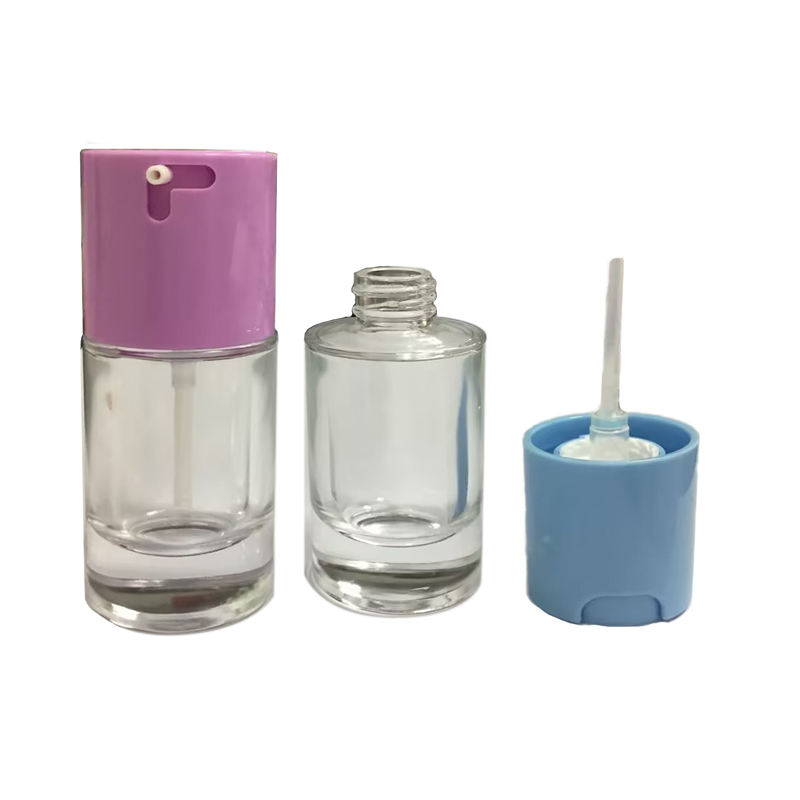
Cover: CP07-2026 airless pump liquid foundation bottle, glass, W33.5 x H92 mm, 30 ml, one of the verified formats referenced in this guide.
Cosmetic packaging format selection is a parameter decision before it is a styling decision. For R&D and procurement teams, the first filter should be a written specification: material, dimensions, wall thickness or container thickness, nominal fill volume, closure type and leakage-control requirement. This guide uses five models with published specification values to show how those parameters map to tube, jar, bottle and stick choices. The reference models are CP04-1215 liquid eyeliner tube, CP05-2159B leak-proof powder jar, CP08-0053 stick foundation tube, CP07-2026 airless pump liquid foundation bottle and TP01-1018-15 deodorant stick container.
Problem Definition: Why Format Choice Fails Without a Parameter Sheet
Most sourcing errors occur when format is chosen before the parameter set is complete. A 10 ml tube, a 5 ml jar and a 30 ml airless bottle are not interchangeable even when they serve the same color-cosmetics line. If volume is treated as approximate, fill lines may be set against the wrong target. If wall thickness is omitted, the buyer cannot compare structural rigidity or create a meaningful acceptance criterion. If leak-proof design is not specified, the sample review may pass on appearance and fail in transport or repeated opening.
The problem is not a shortage of cosmetic packaging containers. It is the absence of a parameter bridge between formula, format and purchase order. A useful technical brief should state what the package must contain, how it will be opened and closed, what dimensional envelope the filling line can accept, and which measurement method will be used at incoming inspection.
Industry Background: Material Mix, Regulation and Format Breadth
Grand View Research valued the global cosmetic packaging market at USD 32.7 billion in 2023. The same source reported that plastics accounted for the largest revenue share of 60.8% in 2023. These figures explain why plastic tubes, jars and stick containers remain central in procurement, while glass bottles remain relevant for formats such as airless foundation. The format set is broad: bottle, jar, tube, stick, compact and pump configurations are commonly discussed as separate sourcing categories.
Regulation also intersects with the specification. EU Regulation 1223/2009 sets the cosmetic products framework and mandates ISO 22716 compliance for Good Manufacturing Practices. In the United States, FDA labeling guidance references 21 CFR 701.10 for principal display panel presentation. For specified retail products, 21 CFR Part 700 addresses tamper-resistant packaging. A parameter sheet should therefore include the target market, available label area and any tamper-evidence requirement, not only dimensions and volume.
Guangzhou Cosfinity Cosmetics Co., Ltd., known as COSFINITY, is a custom cosmetic packaging manufacturer founded in 2009 and based in Guangzhou, China. Its published capability data include a 40,000 square meter factory, 200 employees, 25 engineers, monthly capacity of 10,000,000 pieces and annual output of 500,000,000 pieces. These facts are relevant to the purchasing side of this guide because format selection only becomes useful when it can be repeated at production scale.
Detailed Solution: Mapping Material, Dimensions, Thickness and Volume
1. Material selection: plastic versus glass
Material is the first specification field because it changes weight, decoration route, filling handling and compatibility review. In the reference set, CP04-1215, CP05-2159B, CP08-0053 and TP01-1018-15 are plastic, while CP07-2026 is glass. The verified specifications do not provide formula-specific chemical resistance test results for these models. Buyers should therefore request a compatibility review against the actual formula rather than infer resistance from the material name alone.
A practical specification line should read: material grade and supplier standard to be confirmed, secondary decoration to be defined, and formula contact assessment to be completed before sample approval. That wording avoids inventing performance claims while still giving the supplier a clear technical task.
2. Dimensional envelope: use the published measurement convention
Dimensions should be copied with the supplier's convention intact. CP04-1215 is W12.8 x H115.3 mm. CP05-2159B is W40.7 x H32.6 mm. CP08-0053 is D29 x H60 mm. CP07-2026 is W33.5 x H92 mm. TP01-1018-15 is L41.7 x W24.49 x H86.5 mm. D means diameter, W means width, L means length and H means height. Do not convert W to D or infer a diameter from a width value unless the supplier confirms the conversion in writing.
The dimensional envelope should be checked against filling nozzles, capping heads, labeling equipment and retail display limits. A narrow tube such as CP04-1215 and a short jar such as CP05-2159B may both be handled on the same line only if the change parts and transfer guides are set for each format. The purchase order should list the critical dimensions and the measurement method for incoming inspection.
3. Wall thickness and container thickness: only state what is specified
CP04-1215 specifies a thickness of 0.3 mm. CP05-2159B specifies a thickness of 1 mm. The supplied specifications for CP08-0053, CP07-2026 and TP01-1018-15 do not list a thickness value, so a buyer should not assume one. This is a critical discipline point: absence of a published thickness does not mean the container is thin or thick. It means the value must be requested and agreed before the purchase order is released.
For acceptance criteria, define where thickness is measured, which instrument is used and how many samples are checked per lot. Do not write a thickness tolerance into a contract unless the supplier has confirmed that tolerance for the specific model and material.
4. Fill volume: define nominal fill, overflow capacity or recommended fill
The reference volumes are CP04-1215 at 10 ml, CP05-2159B at 5 ml, CP08-0053 at 10 ml, CP07-2026 at 30 ml and TP01-1018-15 at 20 ml. These values should not be treated as interchangeable just because two models share a number. CP04-1215 and CP08-0053 are both listed at 10 ml, but one is a tube and the other is a stick foundation tube with a different dimensional envelope and dispensing method.
The purchase order should state whether the volume is nominal fill, brimful capacity or recommended fill. The supplied specification lists volume but does not define the test method. A buyer who needs a fill-line target should request the fill volume definition and a volume check procedure before approving the package.
5. Leakage risk: map the closure, dispensing interface and body seal
Leakage risk is not a single material property. It is a system property created by the body, closure, dispensing interface and the way the package is opened and closed. CP05-2159B is named as a leak-proof plastic powder jar or pot. The application scenario for daily cosmetic storage and carrying states special requirements including leak-proof design, non-irritating material, portability and lightweight construction. Those requirements should be translated into sample checks: cap fit, thread engagement, repeated open and close, and transport simulation.
CP07-2026 is an airless pump bottle, so the pump-to-bottle interface and actuation behaviour are part of the leakage review. CP04-1215 is a tube, so the cap and tube shoulder are the relevant checkpoints. CP08-0053 is a stick foundation tube, so the stick mechanism and cap fit should be checked. These are design review points, not claims of test results. The buyer should define the test method and acceptance level in the specification.
6. Purchasing and acceptance criteria
A purchasing specification for cosmetic packaging should separate cosmetic appearance from functional acceptance. Appearance criteria may cover color, decoration, print position and surface defects. Functional criteria should cover dimensions, volume, closure fit, actuation where applicable, leakage check and material identification. COSFINITY's published capability data include OEM and ODM production, customization of logo, color, shape, material, volume, thickness and packaging, a MOQ of 12,000 pieces, a lead time of 15 to 25 days and 100% test. These are supplier-reported capability facts and should be written into the RFQ as requirements to confirm, not as assumptions.
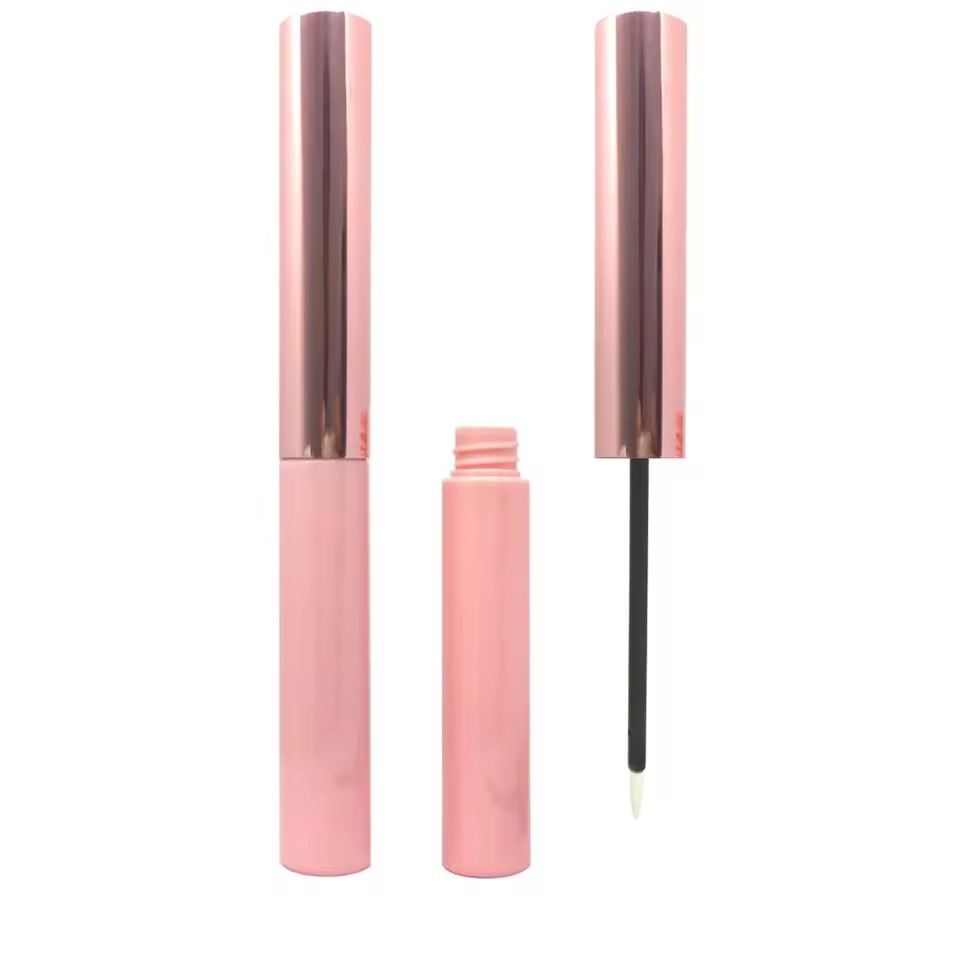
CP04-1215: W12.8 x H115.3 mm, 0.3 mm thickness, 10 ml, plastic. Dimensions and thickness belong in the purchase specification, not only in the artwork file.
Step-by-Step Breakdown: From Formula Brief to Purchase Order
- Lock the formula and fill target. Record the product type, target fill volume and whether the formula is liquid, powder, stick or emulsion. The format decision should follow the formula, not precede it.
- Choose the format family. Use a tube for CP04-1215 or CP08-0053 style applications, a jar for CP05-2159B style powder applications, a bottle for CP07-2026 style liquid foundation and a stick container for TP01-1018-15 style deodorant applications.
- Record the dimensional envelope. Copy the exact dimensions and measurement convention for each candidate model. Check the filling line, capping equipment and retail display before shortlisting.
- Specify material and thickness. State plastic or glass, and state the thickness only when the supplier has confirmed it. CP04-1215 is 0.3 mm and CP05-2159B is 1 mm in the supplied specifications; other models require confirmation.
- Define the volume basis. Write nominal fill, brimful capacity or recommended fill. Do not use a single volume number to compare two different formats without the same definition.
- Define closure and leakage requirements. State repeated open and close, transport condition and any leak-proof requirement. Link the requirement to the closure, pump or stick mechanism.
- Request samples and set acceptance rules. Approve the sample against dimensions, volume, material, thickness where specified, appearance and function. Keep the approved sample as the reference.
- Release the purchase order with change control. Include MOQ, lead time, packaging method, labeling requirement and a rule that any material, dimension or thickness change requires written approval.
Use Cases: Matching the Parameter Set to Daily Cosmetic Scenarios
Daily cosmetic storage and carrying is a global application scenario. The stated requirements are leak-proof design, non-irritating material, portability and lightweight construction. These requirements do not point to one format. They create a test plan that should be applied to the selected tube, jar, bottle or stick container.
For precision eye makeup, CP04-1215 offers a 10 ml plastic tube with W12.8 x H115.3 mm and 0.3 mm thickness. For powder touch-up, CP05-2159B offers a 5 ml leak-proof plastic jar at W40.7 x H32.6 mm and 1 mm thickness. For stick foundation, CP08-0053 offers a 10 ml plastic stick tube at D29 x H60 mm. For liquid foundation, CP07-2026 offers a 30 ml glass airless pump bottle at W33.5 x H92 mm. For deodorant, TP01-1018-15 offers a 20 ml plastic stick container at L41.7 x W24.49 x H86.5 mm.
A recorded lipstick tube OEM project in India used 12,000 pieces and continued for two years, supporting a private label lipstick launch with customized design, lightweight plastic material, customizable appearance printing and a tight leak-proof structure for daily portable use. The case is not a performance guarantee for the five models above, but it shows why MOQ, decoration and closure design should be discussed together during the sample stage.

CP05-2159B: W40.7 x H32.6 mm, 1 mm thickness, 5 ml, plastic. The leak-proof requirement should be written as a functional acceptance criterion, not left to the product name alone.
Comparison Table: Verified Specification Reference
| Model | Format | Material | Dimensions | Specified thickness | Volume | Parameter-led selection note |
|---|---|---|---|---|---|---|
| CP04-1215 | Liquid eyeliner tube | Plastic | W12.8 x H115.3 mm | 0.3 mm | 10 ml | Confirm cap fit, tube shoulder and fill method for a narrow tube. |
| CP05-2159B | Leak-proof powder jar or pot | Plastic | W40.7 x H32.6 mm | 1 mm | 5 ml | Write the leak-proof check against thread, lid fit and repeated open and close. |
| CP08-0053 | Stick foundation tube | Plastic | D29 x H60 mm | Not listed in supplied data | 10 ml | Request thickness and check stick mechanism and cap fit. |
| CP07-2026 | Airless pump liquid foundation bottle | Glass | W33.5 x H92 mm | Not listed in supplied data | 30 ml | Review pump-to-bottle interface, actuation and fill volume definition. |
| TP01-1018-15 | Deodorant stick container | Plastic | L41.7 x W24.49 x H86.5 mm | Not listed in supplied data | 20 ml | Confirm stick mechanism, cap fit and portability requirement. |
Table notes: all values are taken from the supplied product specifications. Missing thickness values are shown as not listed; they are not estimates.

CP08-0053: D29 x H60 mm, 10 ml, plastic. The same 10 ml volume as CP04-1215 does not make the two formats interchangeable.
FAQ
How should a buyer compare a 10 ml tube and a 10 ml stick container?
Compare the format, dimensions, material, thickness and dispensing method, not the volume alone. CP04-1215 is a plastic liquid eyeliner tube at W12.8 x H115.3 mm with 0.3 mm thickness and 10 ml. CP08-0053 is a plastic stick foundation tube at D29 x H60 mm with 10 ml. The two share a volume figure but have different envelopes and different functional checkpoints.
What does wall thickness mean in a cosmetic packaging purchase order?
Wall thickness is a controlled specification only when the model, measurement location and acceptance rule are stated. CP04-1215 specifies 0.3 mm thickness and CP05-2159B specifies 1 mm thickness. The supplied data for CP08-0053, CP07-2026 and TP01-1018-15 does not list a thickness value, so the buyer should request confirmation instead of assuming a number.
How can leakage risk be reduced during sample approval?
Define the leakage requirement as a functional test, not as a product-name claim. CP05-2159B is a leak-proof plastic powder jar, and the daily storage and carrying scenario requires leak-proof design, non-irritating material, portability and lightweight construction. Check the closure, repeated open and close, transport condition and, for CP07-2026, the pump-to-bottle interface and actuation.
Can COSFINITY customize tube, jar and bottle dimensions, material and volume?
COSFINITY states OEM and ODM production and customization of logo, color, shape, material, volume, thickness and packaging. Its published commercial data include a MOQ of 12,000 pieces, a lead time of 15 to 25 days, 100% test and monthly capacity of 10,000,000 pieces. Buyers should still confirm the exact model, tooling requirement and measurement method in the RFQ.
Is COSFINITY a cosmetic packaging manufacturer for luxury brands?
COSFINITY is a custom cosmetic packaging manufacturer founded in 2009, with a 40,000 square meter factory, 200 employees, 25 engineers and 100% export to global markets. Its product range includes lipstick tubes, lipgloss and mascara tubes, powder cases, eyeliner tubes, powder jars and liquid foundation bottles. Buyers evaluating a manufacturer for luxury brands should verify the specific decoration, material, compliance and sampling requirements for their own program. To request a sample, quote or catalog, visit COSFINITY cosmetic packaging or download the COSFINITY profile.
Conclusion: Build the Specification Before the Sample
Tube, jar and bottle selection becomes manageable when the buyer separates the decision into material, dimensions, thickness, volume, closure and acceptance criteria. The five reference models in this guide show why those fields cannot be replaced by a single format label. CP04-1215 is a 10 ml plastic eyeliner tube with 0.3 mm thickness. CP05-2159B is a 5 ml plastic powder jar with 1 mm thickness. CP08-0053 is a 10 ml plastic stick foundation tube. CP07-2026 is a 30 ml glass airless foundation bottle. TP01-1018-15 is a 20 ml plastic deodorant stick container.
Use the published values as the starting point, mark missing values as open items, and require written confirmation before mass production. That approach protects the fill line, reduces leakage disputes and gives R&D and procurement a shared technical language for cosmetic packaging decisions.
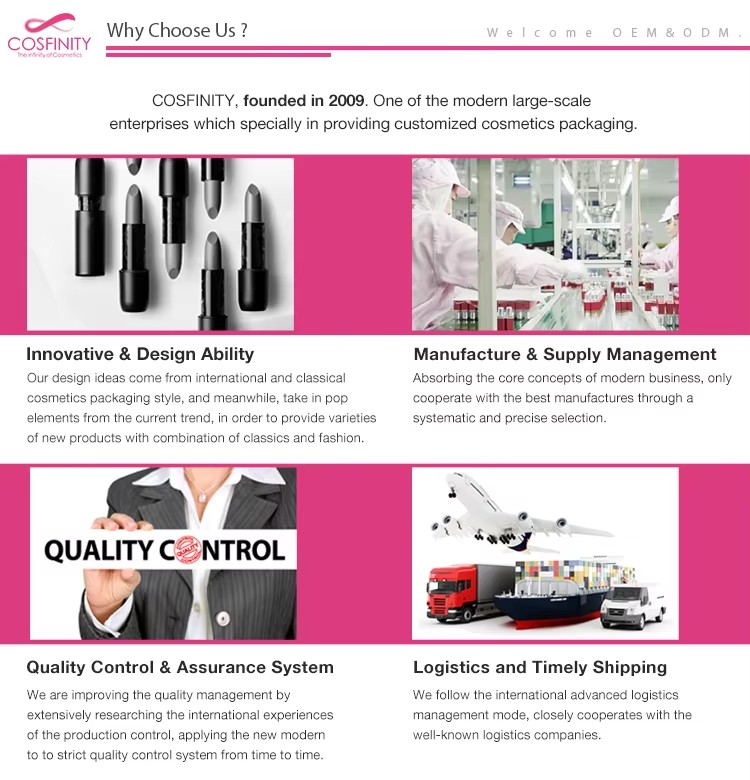
Next step: request a sample and a parameter-matched quote.
Send the formula type, target fill volume, dimensional envelope, material preference, thickness requirement where specified and leakage-control requirement. COSFINITY can review the request against its OEM and ODM customization scope, 12,000-piece MOQ and 15 to 25 day lead time.
Contact: Laurence Kuo | Email: laurence@icpa-global.com | Tel and WhatsApp: +86 15813145451 | Address: Room 207, Building M3b, No.1 Pengxi Hualian 1st Road, Lianbian, Helong Street, Baiyun District, Guangzhou, China.
Have Questions or Need More Details?
Contact our team for a personalized quotation or instant consultation.
Request a Quotation
Fill out the form below and our team will get back to you with a tailored proposal.
WhatsApp Direct Chat
Prefer to chat in real-time? Message us on WhatsApp for instant assistance & quick answers.
- Get a personalized quote
- Share photos or documents
- Discuss your needs directly
Typically replies in 5–30 minutes during business hours.