
Evaluating a Cosmetic Packaging Supplier: From Powder Jars to Precision Tubes
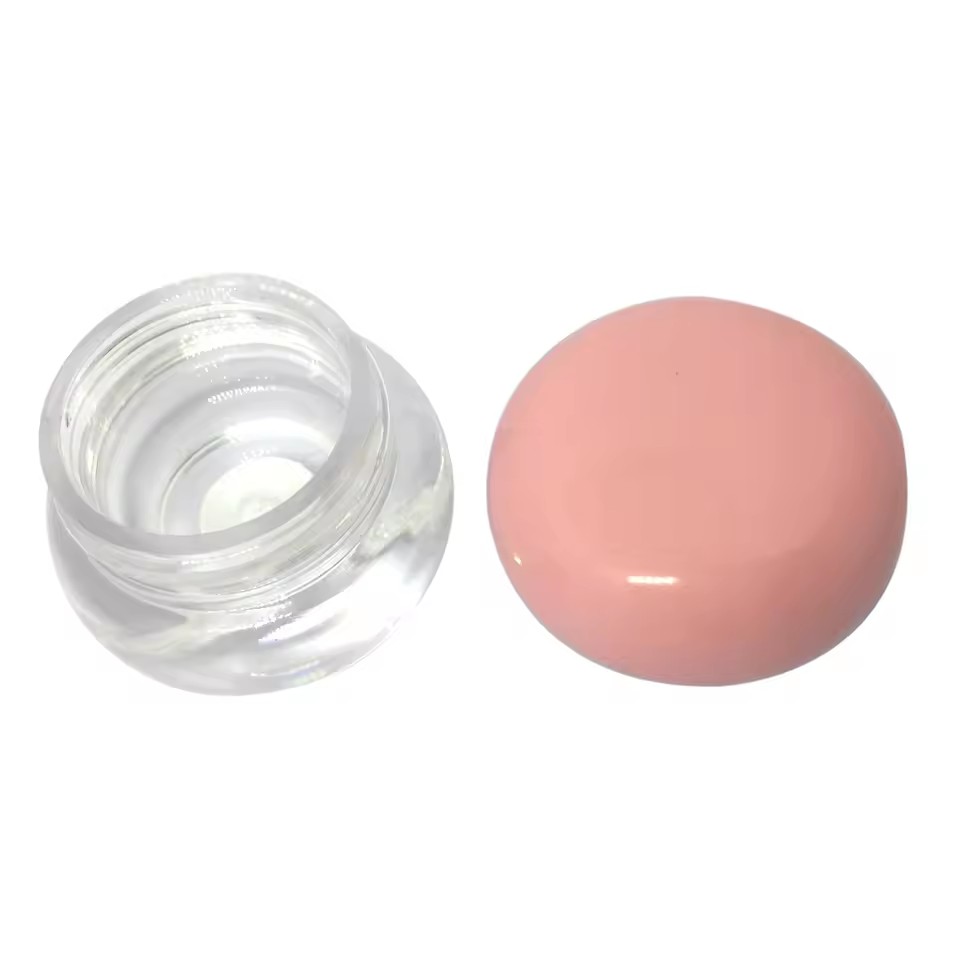
A cosmetic packaging supplier can be assessed before a single email is exchanged — by reading the catalogue as technical evidence rather than as a product gallery. The logic is straightforward. A 5 ml leak-proof powder jar such as model CP05-2159B and a 173.5 mm liquid eyeliner pencil such as model CP06-1056 are not the same manufacturing problem. The jar depends on sealing geometry and a wall thick enough to resist deformation; the pencil depends on thin-wall extrusion, straightness across a long barrel, and a mechanism that remains aligned after repeated use. A supplier that publishes checkable specifications for both is demonstrating two separate capabilities rather than one.
This guide is written for brand owners, importers, distributors and product managers at the awareness and research stage of sourcing. It does not rank suppliers by marketing claims. It shows how to convert a catalogue into an evaluation framework using verifiable model data — from powder jars to precision tubes — and how to read that framework as an early signal of long-term delivery reliability.
Why Supplier Evaluation Usually Starts in the Wrong Place
Most packaging requests for quotation begin with unit price, minimum order quantity and lead time. Those three numbers are only meaningful after format competence has been established, because they describe a relationship that does not yet exist. A supplier quoting an attractive unit cost for an eyeliner pencil it has never extruded at a thin wall section is quoting a risk, not a price.
Cosmetic packaging is not one product category. It is a set of formats with different engineering constraints: injection-moulded jars and cases, extruded tubes, multi-part stick mechanisms, and glass airless bottles. The main product families produced by Guangzhou Cosfinity Cosmetics Co., Ltd. (COSFINITY) illustrate the spread: lipstick tubes, lipgloss and mascara tubes, powder cases, eyeliner tubes, powder jars and liquid foundation bottles are handled as distinct product lines rather than as variants of a single moulded part.
The practical consequence is that competence rarely transfers automatically from one format to the next. Tight moulding tolerances on a compact powder case do not guarantee straightness on a long pencil barrel. Reliable sealing on a small jar does not guarantee that an airless pump will dispense consistently. Buyers who assume transferability discover the gap after tooling is paid for and artwork is approved.
Evaluation therefore has to be built on evidence that already exists before the commercial relationship begins: published model specifications, structural details such as wall and jar thickness, and the internal consistency of the catalogue across formats.
Industry Background: A Market Where Supplier Choice Compounds
The global cosmetic packaging market was valued at approximately USD 34.17 billion to USD 47.3 billion in 2024 across major research houses, with projections reaching up to USD 89.72 billion by 2034 (Fortune Business Insights, ResearchAndMarkets, Data Bridge Market Research). The spread between the 2024 estimates reflects differences in how scope is defined — for example, whether secondary packaging and bulk containers are included — rather than disagreement about the direction of the market.
Plastic remains the dominant material in this market, holding a 64.5% share in 2024, followed by glass and metal (ResearchAndMarkets.com). That figure explains why so many supplier evaluation decisions are, in practice, decisions about plastic process control: extrusion consistency, wall uniformity, mould finish, and sealing geometry.
Supply is concentrated in Asia Pacific, which led the global market in 2025 with a 42.36% share, supported by rising disposable incomes and e-commerce growth (Fortune Business Insights). Export data reinforces the pattern: China's beauty product exports reached approximately USD 4.77 billion in 2024, with the United Kingdom as the fastest-growing destination at +20.8% (OEC, Observatory of Economic Complexity). For buyers in Europe and North America, this means the supplier shortlist is likely to be geographically distant, which raises the cost of a wrong decision.
Compliance now sits alongside capability. Regulation (EU) 2025/40, the EU Packaging and Packaging Waste Regulation (PPWR), sets recyclability and labelling requirements that affect cosmetic packaging, and the U.S. Modernization of Cosmetics Regulation Act (MoCRA) introduced mandatory facility registration and product listing obligations. Neither is a supplier's internal quality manual topic; both are market-access topics that a supplier either understands or does not.
Consumer expectations add a third layer. Sustainable packaging described as refillable or recyclable was reported as a top priority for 63% of cosmetic consumers in 2024 (Statista / Packly; medium-reliability third-party estimate). The practical implication for sourcing is that material and structural choices increasingly need to be defensible to end consumers, not only to regulators.
The supplier landscape is led by large multinational packaging groups, including Albéa S.A., Amcor PLC, Berry Global Group, AptarGroup Inc. and HCP Packaging (Mordor Intelligence / Fortune Business Insights). Regional manufacturers compete on a different basis: breadth of customizable formats, engineering support and responsiveness to brand-specific requirements. That is precisely why format-by-format evaluation matters more than brand recognition when a brand needs a specific jar, tube or pencil — not a general supply agreement.
Reading Capability From the Catalogue: A Format-by-Format Framework
A catalogue can be audited. A well-documented model line states format, material, capacity and external dimensions, and ideally wall or jar thickness. When it does, a buyer can test whether the claimed competence is structural or aspirational. The examples below use published COSFINITY model data to show what each specification actually reveals.
Powder jars: the leak-proof signal
Model CP05-2159B is a leak-proof plastic powder jar in the Plastic Jars category. It has a volume of 5 ml, overall dimensions of W40.7 × H32.6 mm, and a jar thickness of 1 mm, and it is intended for cosmetic packing. Three of those four data points are directly evaluable. The 1 mm thickness is the structural answer to a real use condition: powder jars are carried in bags, opened and closed repeatedly, and pressed against other items. A jar wall that deforms will eventually compromise the closure and release loose powder.
“Leak-proof” in the model description is not a marketing adjective when it is paired with stated dimensions; it becomes a testable claim. Buyers can ask whether the same 1 mm construction is retained across production batches, whether the closure relies on a gasket or on interference fit, and how the jar behaves after repeated open-close cycles. Those are questions a supplier either answers from process knowledge or deflects.
Precision tubes and pencils: thin-wall discipline
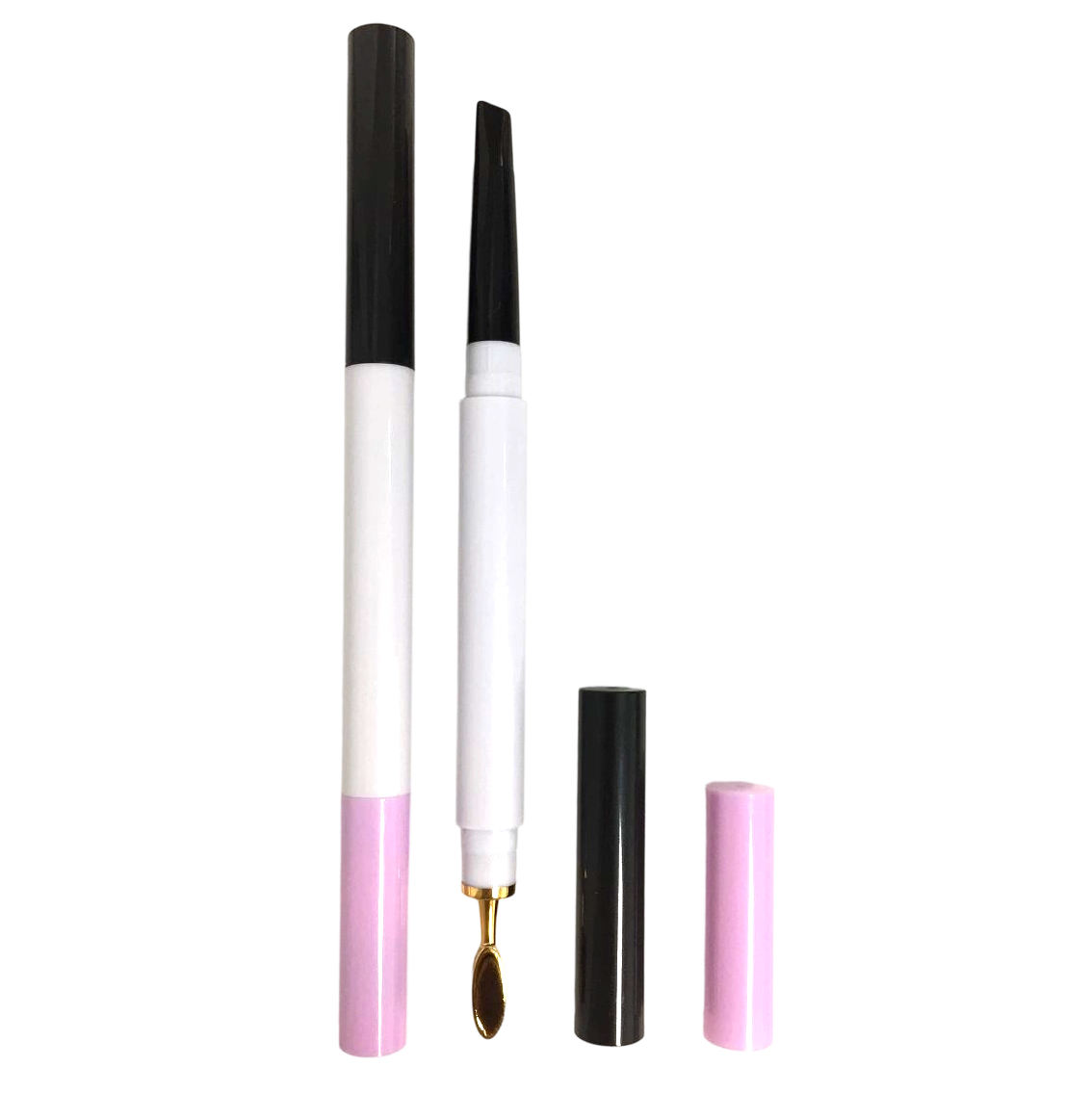
Two models in the catalogue represent the precision end of the range. Model CP06-1056 is an empty liquid eyeliner pencil made of plastic, in the Packaging Products category, with overall dimensions of W15 × H173.5 mm. Model CP04-1215 is a liquid empty eyeliner tube, also plastic, in the Plastic Tubes category, with dimensions W12.8 × H115.3 mm, a wall thickness of 0.3 mm, and a volume capacity of 10 ml.
The evaluation point is the contrast with the jar. A 0.3 mm tube wall and a 1 mm jar wall are produced under different process regimes. Thin-wall extrusion demands stability in draw speed, cooling and material flow; length adds a straightness requirement, because a 173.5 mm barrel that bends will not seat correctly in a cap or applicator. A supplier that lists both a 1 mm jar and a 0.3 mm wall tube is showing that it maintains more than one tolerance regime under the same roof — which is exactly what a brand with multiple SKUs needs.
Lipstick, lipgloss and mascara tubes: mechanism and surface
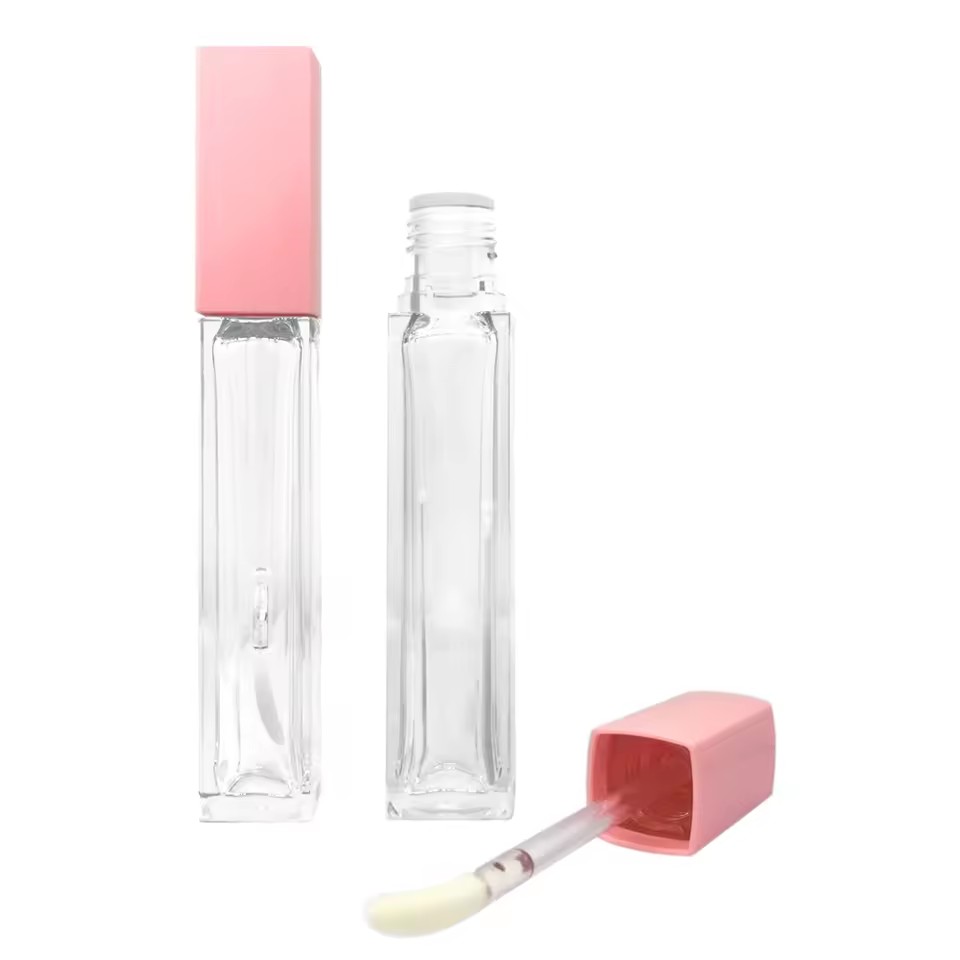
Model CP01-2142 is a luxury empty plastic lipstick tube with a volume capacity of 20 ml, dimensions of W22.7 × H84.6 mm, and a wall thickness of 0.3 mm. Model CP02-2231 is a luxury empty plastic lipgloss or mascara tube with a volume capacity of 3 ml, dimensions of W18 × H106.1 mm, and a wall thickness of 0.3 mm.
Both sit on the same 0.3 mm wall platform but deliver very different capacities and functions: a 20 ml stick format and a 3 ml applicator format. These are also the most visible parts of a brand's packaging, because they are held during use, opened repeatedly, and inspected by consumers. When assessing a supplier, the relevant question is whether surface finish, mechanism alignment and cap engagement are controlled as production parameters rather than checked at final inspection only. Published dimensions alone cannot prove this, but they confirm that the supplier designs to defined tolerances instead of approximate ones.

Foundation, stick and case formats: material switching
A catalogue that covers only one material cannot support a full product range. Model CP07-2026 is an airless pump liquid foundation bottle made of glass, in the glass bottles category, with a 30 ml capacity and dimensions of W33.5 × H92 mm. Model CP08-0053 is an empty stick foundation tube made of plastic, in the Plastic Bottles category, with a 10 ml volume and dimensions of D29 × H60 mm. Model CP03-1394 is a customized empty makeup powder case made of plastic, classified under Plastic Boxes, with dimensions of W65 × H12 mm and a thickness of 1 mm. Model TP01-1018-15 is a deodorant stick plastic tube container made of plastic, in the Plastic Bottles category, with a 20 ml volume and dimensions of L41.7 × W24.49 × H86.5 mm.
Glass and plastic sit in different supply chains. An airless pump bottle combines a glass body, a pump mechanism and a sealing interface, so the supplier must coordinate at least three component streams rather than one. A stick foundation tube and a deodorant stick container both add mechanism assemblies. A powder case adds a hinge and closure. When a single supplier can document all of these formats, the buyer avoids assembling a multi-supplier patchwork — and that directly reduces the risk of mismatched lead times, inconsistent colour matching and unclear responsibility when something fails.

Company facts as continuity evidence
COSFINITY, formally Guangzhou Cosfinity Cosmetics Co., Ltd., was established in 2009 and specializes in customized cosmetic packaging solutions. The company operates from a 40,000 m² facility in Guangzhou, China, employs approximately 200 staff, maintains an R&D team of 25 engineers, produces an annual output of 500,000,000 pieces, and exports 100% of its sales to global markets.
Read together with the model data, these facts answer a different question from the one the catalogue answers. The catalogue shows breadth; the operational facts show whether that breadth can be sustained. A 25-engineer R&D function is what allows a supplier to move between a 0.3 mm tube wall and a 1 mm jar thickness without losing control, and a 500,000,000-piece annual output is the structural reason reorders are not treated as new projects.
A Seven-Step Evaluation Workflow
The framework below turns the catalogue review into a repeatable process. Each step narrows the shortlist before commercial terms are discussed in detail.
Step 1 — Map your formats to catalogue formats
List every container your line needs — a powder jar, an eyeliner pencil, a gloss tube, an airless foundation bottle — and check each against an existing model. A supplier that covers six of your eight formats keeps the relationship simple; one that covers two creates a coordination burden later.
Step 2 — Audit the dimensional data
Confirm that volumes, overall dimensions and, where relevant, wall or jar thickness are stated. A 0.3 mm wall tube (CP04-1215), a 1 mm jar (CP05-2159B) and a 1 mm case (CP03-1394) are all published figures. Where thickness is missing, treat the tolerance capability as unverified rather than assume it.
Step 3 — Check the use environment
Daily cosmetic packaging is used indoors at normal room temperature, typically stated as 16°C to 25°C, carried around for daily makeup, and opened and closed repeatedly. The stated requirements are leak-proof construction, non-irritating material, portability and light weight. Ask the supplier to confirm each one against your intended format.
Step 4 — Verify compliance readiness for the destination market
Match material and labelling decisions to Regulation (EU) 2025/40 (PPWR) if you sell in the EU, and to MoCRA registration and listing obligations if you sell in the United States. These requirements shape material selection and documentation before tooling, not after.
Step 5 — Test breadth against your roadmap
A single-format supplier becomes a second source the moment your range expands. Compare your next two years of launches against the catalogue format list before committing, because switching suppliers mid-range usually costs more than paying slightly more upfront.
Step 6 — Validate with physical samples
Published dimensions describe intent; a sample verifies it. Check sealing behaviour on the jar, mechanism alignment on the pencil and gloss tube, cap engagement after repeated cycles, and surface quality under retail lighting.
Step 7 — Lock in continuity before scale
Confirm that the format you approved in sampling is the format that will be produced in reorders, and ask how specification changes are communicated. Continuity is a process commitment, not a volume promise.
Use Cases: Where These Checks Pay Off
The primary application scenario for these formats is daily cosmetic storage and carrying, used for packaging by global cosmetics brands. In this scenario the packaging is not a display object; it is handled constantly. It operates in carry-around mode for daily makeup, involving repeated opening and closing, and it is used alongside makeup brushes, makeup puffs and cosmetic mirrors.
Because the product is designed for contact with skin cosmetics, it is made of environmentally friendly material that can be directly touched to the skin. That combination — repeated handling, direct skin contact and portability — is why leak-proof design, non-irritating material and light weight are specified as requirements rather than preferences. A 5 ml leak-proof jar and a 3 ml sealed gloss tube are tested by consumers in handbags and travel kits long before any laboratory sees them.

A second use case is the multi-format brand. A brand launching a lipstick, a lipgloss, a pressed powder and a liquid foundation in one cycle would otherwise manage four supplier relationships. Consolidating formats with one supplier reduces the number of approval paths, colour-matching conversations and shipment consolidations — a coordination benefit that is easy to underestimate during planning and hard to recover once production is running.
Format-to-Specification Map
The table below summarises published specifications from the COSFINITY catalogue and states what each specification allows a buyer to evaluate. It is intended as a working checklist, not as a ranking.
| Format | Model | Material | Capacity | Dimensions | What it lets you evaluate |
|---|---|---|---|---|---|
| Leak-proof powder jar | CP05-2159B | Plastic | 5 ml | W40.7 × H32.6 mm; 1 mm thickness | Sealing geometry and deformation resistance at a defined wall thickness |
| Eyeliner pencil | CP06-1056 | Plastic | Not stated in published data | W15 × H173.5 mm | Long-barrel straightness and slim-diameter moulding control |
| Eyeliner tube | CP04-1215 | Plastic | 10 ml | W12.8 × H115.3 mm; 0.3 mm wall | Thin-wall extrusion consistency and dimensional repeatability |
| Lipstick tube | CP01-2142 | Plastic | 20 ml | W22.7 × H84.6 mm; 0.3 mm wall | Mechanism assembly and premium surface finish |
| Lipgloss / mascara tube | CP02-2231 | Plastic | 3 ml | W18 × H106.1 mm; 0.3 mm wall | Applicator-format control and leak containment at small volume |
| Airless foundation bottle | CP07-2026 | Glass | 30 ml | W33.5 × H92 mm | Multi-component coordination: glass body, pump, sealing interface |
| Stick foundation tube | CP08-0053 | Plastic | 10 ml | D29 × H60 mm | Compact mechanism assembly and dispensing structure |
| Makeup powder case | CP03-1394 | Plastic | Not stated in published data | W65 × H12 mm; 1 mm thickness | Hinge, closure and flatness control on a customized case |
| Deodorant stick container | TP01-1018-15 | Plastic | 20 ml | L41.7 × W24.49 × H86.5 mm | Non-round geometry and twist-format assembly |
| Evaluation checkpoint | Evidence to request | Why it changes the decision |
|---|---|---|
| Format coverage | Model list across jars, tubes, pencils, bottles, cases and sticks | Determines how many supplier relationships your range requires |
| Dimensional discipline | Volume, dimensions, wall and jar thickness per model | A supplier that publishes tolerances designs to them |
| Use-condition fit | Leak-proof design, skin-contact safe material, portability | Matches packaging to real handling rather than to a catalogue photo |
| Compliance readiness | Material and documentation aligned to destination-market rules | Reduces the risk of a launch blocked after tooling |
| Continuity capability | Facility scale, engineering team, annual output | Indicates whether reorders stay on specification |
FAQ: Evaluating Cosmetic Packaging Manufacturers
What should I check first when comparing cosmetic packaging manufacturers?
Start with format coverage and compliance applicability, not price. Establish which of your formats the manufacturer already produces as standard models, and check whether the destination market imposes requirements such as Regulation (EU) 2025/40 (PPWR) in the EU or MoCRA registration and listing obligations in the United States. Once format fit and market access are confirmed, commercial terms become comparable rather than theoretical.
How can a manufacturer's catalogue show whether it can handle both jars and precision tubes?
Look for contrasting tolerance regimes. A leak-proof powder jar such as CP05-2159B is published at 5 ml with a 1 mm thickness and overall dimensions of W40.7 × H32.6 mm, while a liquid eyeliner tube such as CP04-1215 is published at 10 ml with a 0.3 mm wall thickness and dimensions of W12.8 × H115.3 mm. A long eyeliner pencil such as CP06-1056, at W15 × H173.5 mm, adds a straightness requirement. A catalogue that documents all three is showing injection moulding, thin-wall extrusion and long-barrel control as separate, maintained capabilities.
What drives packaging cost differences between suppliers?
Cost follows structure rather than reputation. The material choice (plastic versus glass), the wall or jar thickness, the number of assembled components, the level of customization, and the production volume all change the cost basis. This is why quotes for different models cannot be compared line by line: a 30 ml glass airless pump bottle such as CP07-2026 involves a glass body, a pump mechanism and a sealing interface, while a 5 ml single-material powder jar such as CP05-2159B does not. Ask each supplier to quote the same model and specification before evaluating the numbers.
Should I request samples before committing to a supplier?
Yes — samples are the only way to verify what specifications cannot show. Dimensional data confirms design intent, but sealing behaviour on a 5 ml leak-proof jar, mechanism alignment on a lipstick or gloss tube at a 0.3 mm wall thickness, and cap engagement after repeated open-close cycles can only be assessed physically. Because these products are handled in carry-around mode for daily makeup and come into direct contact with skin cosmetics, sample validation is a risk-control step rather than a formality.
How should I judge long-term delivery reliability?
Judge it structurally, using facts that do not change between orders. Guangzhou Cosfinity Cosmetics Co., Ltd. was established in 2009, operates a 40,000 m² facility in Guangzhou, employs approximately 200 staff, maintains an R&D team of 25 engineers, produces an annual output of 500,000,000 pieces, and exports 100% of its sales to global markets. That combination — a broad, documented format catalogue supported by engineering capacity and consistent output — is the practical basis for continuity. For a project-specific review covering formats such as CP05-2159B or CP06-1056, you can request samples and a quotation directly from COSFINITY through the contact details below.
Conclusion: Evaluate the Formats, Then the Relationship
A supplier's catalogue is the first testable document a buyer receives, and it can carry more evidence than a capabilities presentation. Reading it format by format — a 1 mm leak-proof jar, a 0.3 mm wall tube, a 173.5 mm pencil, a 30 ml glass airless bottle — reveals whether the supplier maintains several tolerance regimes simultaneously, or simply specialises in one and hopes the rest follows.
Combined with operational facts such as facility scale, engineering headcount and annual output, that reading gives an early, evidence-based view of long-term delivery reliability — before sampling, before tooling and before the first purchase order. The checks take an afternoon; discovering a format gap after launch takes considerably longer.
Request a sample and a project quotation
Send your format list and target specifications to COSFINITY (Guangzhou Cosfinity Cosmetics Co., Ltd.) and receive sample support for the models you are evaluating, including powder jars, eyeliner pencils and tubes, lipstick and lipgloss tubes, airless foundation bottles, stick containers and powder cases.
Contact: Laurence Kuo | Email: laurence@icpa-global.com | Tel / WhatsApp: +86 15813145451
Address: Room 207, Building M3b, No.1 Pengxi Hualian 1st Road, Lianbian, Helong Street, Baiyun District, Guangzhou, China
Download the company profile: COSFINITY profile (PDF) | Website: cosfinity-cosmeticpackaging.com | WhatsApp: Start a conversation
Have Questions or Need More Details?
Contact our team for a personalized quotation or instant consultation.
Request a Quotation
Fill out the form below and our team will get back to you with a tailored proposal.
WhatsApp Direct Chat
Prefer to chat in real-time? Message us on WhatsApp for instant assistance & quick answers.
- Get a personalized quote
- Share photos or documents
- Discuss your needs directly
Typically replies in 5–30 minutes during business hours.