
Plastic Packaging Compliance Essentials for Global Cosmetic Brands: Material & Safety Standards
Plastic Packaging Compliance Essentials for Global Cosmetic Brands: Material & Safety Standards
Plastic cosmetic packaging compliance is decided by what a container is made of, what it is made with, and what evidence a supplier can place in front of a brand's regulatory team — not by a single recycling symbol. Because cosmetic packaging stays in direct and repeated contact with skin, the practical compliance question is narrower and harder: does this plastic component meet the material-grade, additive, and skin-safety expectations of every market the finished product will be sold in?
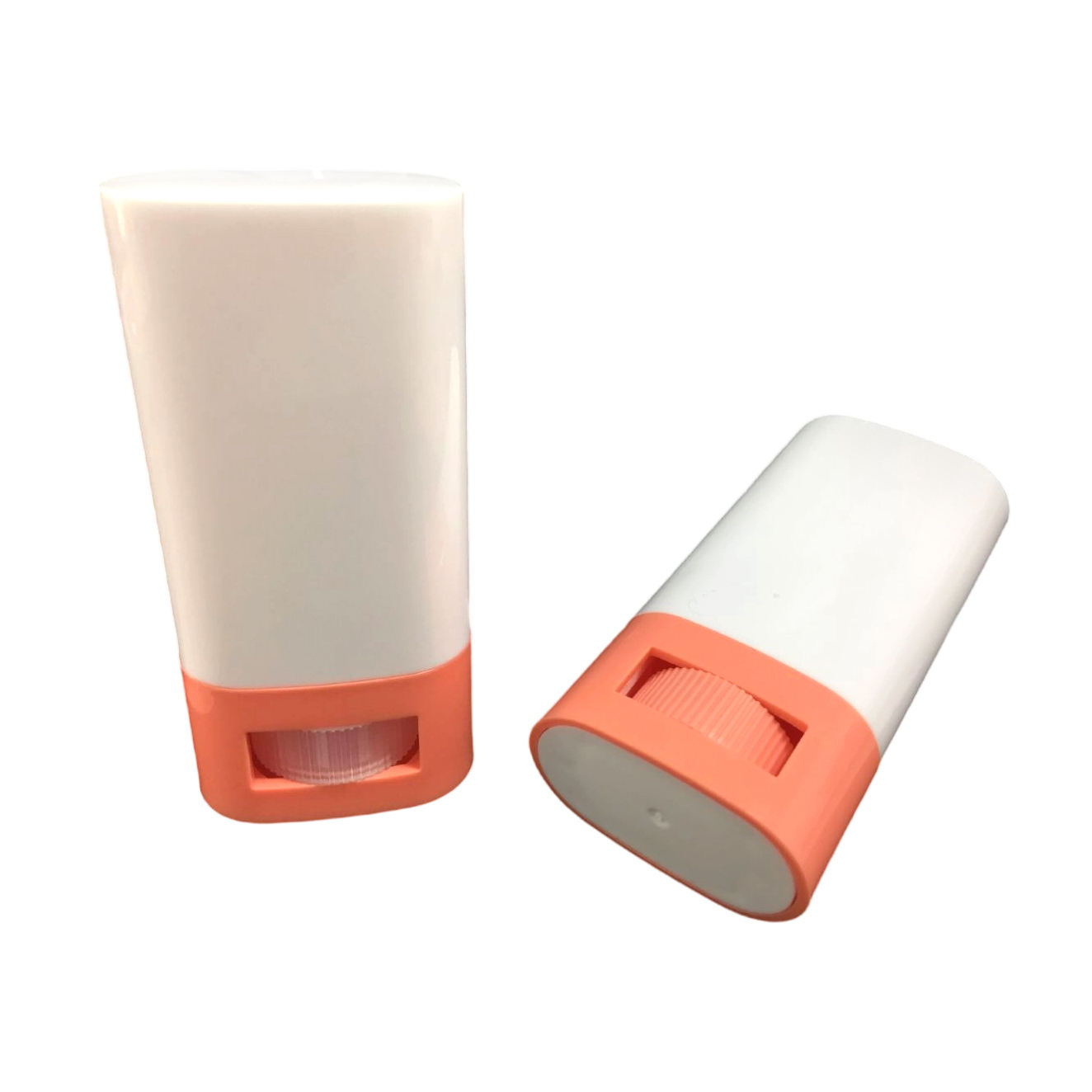
Plastic cosmetic packaging formats such as the 20ml stick tube (TP01-1018-15) sit in direct, repeated skin contact — the starting point of every compliance decision.
Guangzhou Cosfinity Cosmetics Co., Ltd. (COSFINITY) is a cosmetic packaging manufacturer founded in 2009 in Guangzhou, China, producing lipstick tubes, lipgloss and mascara tubes, powder cases, eyeliner tubes, powder jars, and liquid foundation bottles, with 100% of output exported to global markets. Its standard range shows the compliance surface a brand actually manages: nine core formats, eight of them plastic, with one airless pump liquid foundation bottle (CP07-2026) built on a glass body.
Where Compliance Risk Actually Sits in a Cosmetic Package
A compliance failure in cosmetics is rarely a formula failure. It is usually a packaging failure — and it typically surfaces in one of three places.
The first is a material declaration mismatch. A brand specifies a plastic grade for a lipstick tube or powder jar, the supplier substitutes an equivalent-looking resin, and the finished packaging no longer matches the material statement the brand filed for its market. Plastic dominates this category — a 64.5% share of cosmetic packaging in 2024, ahead of glass and metal (ResearchAndMarkets) — which means the majority of declaration risk is concentrated in plastic components.
The second is unverified additive risk. Resins, colourants, coatings, and printing inks travel with the container into daily skin contact. Additives that are acceptable in a decorative object may not be acceptable in an object applied to lips or the eye area.
The third is a documentation gap at market entry. The packaging itself may be perfectly compliant, but the test evidence, material statements, or filing records that regulators and retailers request do not exist in the supplier's files.
The working definition: a compliant plastic cosmetic package is one whose material grade, additive profile, skin-contact components, and supporting evidence are all defined in writing before production begins — and remain unchanged through bulk delivery.
Industry Background: Why Plastic Compliance Requirements Are Accelerating
The commercial weight behind packaging compliance keeps growing. The global cosmetic packaging market was valued at approximately USD 34.17B to USD 47.3B in 2024, with expectations to reach up to USD 89.72B by 2034 (Fortune Business Insights / ResearchAndMarkets / Data Bridge). The two published estimates differ because analysts scope secondary packaging and industrial bulk containers differently — a useful reminder that any single market figure should be read with its definition attached.
Asia Pacific led the global market in 2025 with a 42.36% share, driven by rising disposable incomes and e-commerce growth (Fortune Business Insights). On the supply side, China's beauty product exports reached approximately USD 4.77B in 2024, with the UK the fastest-growing destination market at +20.8% (OEC). Packaging sourcing and packaging compliance have grown together.
Two regulatory developments explain most of the current pressure on plastic formats:
- EU Packaging and Packaging Waste Regulation (EU) 2025/40 (PPWR) — mandates strict recyclability and labeling standards for cosmetics packaging, affecting what can be placed on the EU market and how it must be marked (European Commission / Cosmeservice).
- U.S. Modernization of Cosmetics Regulation Act (MoCRA, 2022) — introduced mandatory facility registration and product listing obligations for packaging-related entities, moving the U.S. market closer to a documented, filing-based regime (FDA / ChemLinked).
Consumer expectations reinforce the same direction. Sustainable packaging — refillable or recyclable — is a top priority for 63% of cosmetic consumers in 2024 (Statista / Packly). Recyclability is the headline; material safety is the baseline that sits underneath it.
The Four-Layer Material and Safety Framework
Compliance work becomes manageable when it is treated as four sequential layers rather than one approval step. Each layer has a specific question, a specific owner, and a specific piece of evidence.
Layer 1 — Base polymer grade and what "food-grade" actually means
"Food-grade" is a useful first filter when sourcing plastic cosmetic packaging, because it signals that a resin has been assessed for contact applications rather than for structural or decorative use. It is not, however, a substitute for skin-contact assessment: cosmetic packaging is judged against a different exposure profile than a food container, and it is often in contact with a formula — oils, pigments, solvents — rather than with food.
The practical rule is to specify the grade in writing and confirm it is the grade produced. COSFINITY's application scenario documentation describes its cosmetic packaging products as environmentally friendly and suitable for direct contact with skin, with non-irritating material properties — the supplier-side material statement that a brand should then pair with a written resin declaration for each market.
Layer 2 — Additive control, including BPA and restricted monomers
BPA-free is the most commonly requested additive statement in cosmetic packaging procurement, and it is a reasonable proxy for how carefully a supplier controls its resin and coating chemistry. A BPA declaration alone is not sufficient, because risk in a finished package can also come from colourants, masterbatch, surface coatings, hot-stamping foils, and printing inks.
Ask for the declaration to cover the full component list, not just the container body. On a lipstick tube, that means the tube body, the mechanism, the inner cup, and the decoration. On a mascara or lipgloss tube, it means the tube, the cap, and the applicator — the applicator is a skin-contact part that is frequently left out of material conversations.
Layer 3 — Whole-component skin contact, not just the body
Compliance reviews often examine the container body and stop there. In daily use, however, several additional components reach the consumer:
- The applicator on lipgloss, mascara, and eyeliner formats.
- The seal, gasket, or plug that controls leakage — the Leak-Proof Plastic Powder Jar / Pot (CP05-2159B) is specified as leak-proof precisely because the seal is a functional and contact-relevant part.
- The decorated surface — printing, coating, or metallised finishes applied to the outside of the tube.
- The closure mechanism — the moving parts of a lipstick tube or a stick foundation format.
Product-specific requirements supplied for these formats also include leak-proof design, non-irritating material, portability, and lightweight construction, and the stated normal working conditions are an indoor daily makeup scene at 16°C to 25°C with repeated open-and-close use. A material review should therefore cover the parts that move, seal, and touch skin — not only the visible body.
Layer 4 — Test evidence and traceability
Documentation is what converts a material claim into a defensible position. For a plastic cosmetic packaging program, the evidence pack typically includes a written material declaration per component, component-level safety testing appropriate to the intended skin-contact area, and lot traceability that links a delivered shipment back to the material batch.
COSFINITY applies 100% testing as its stated quality-control method across production, which is the operational counterpart to a documentary claim: it means conformity is checked on every unit rather than sampled after the fact.
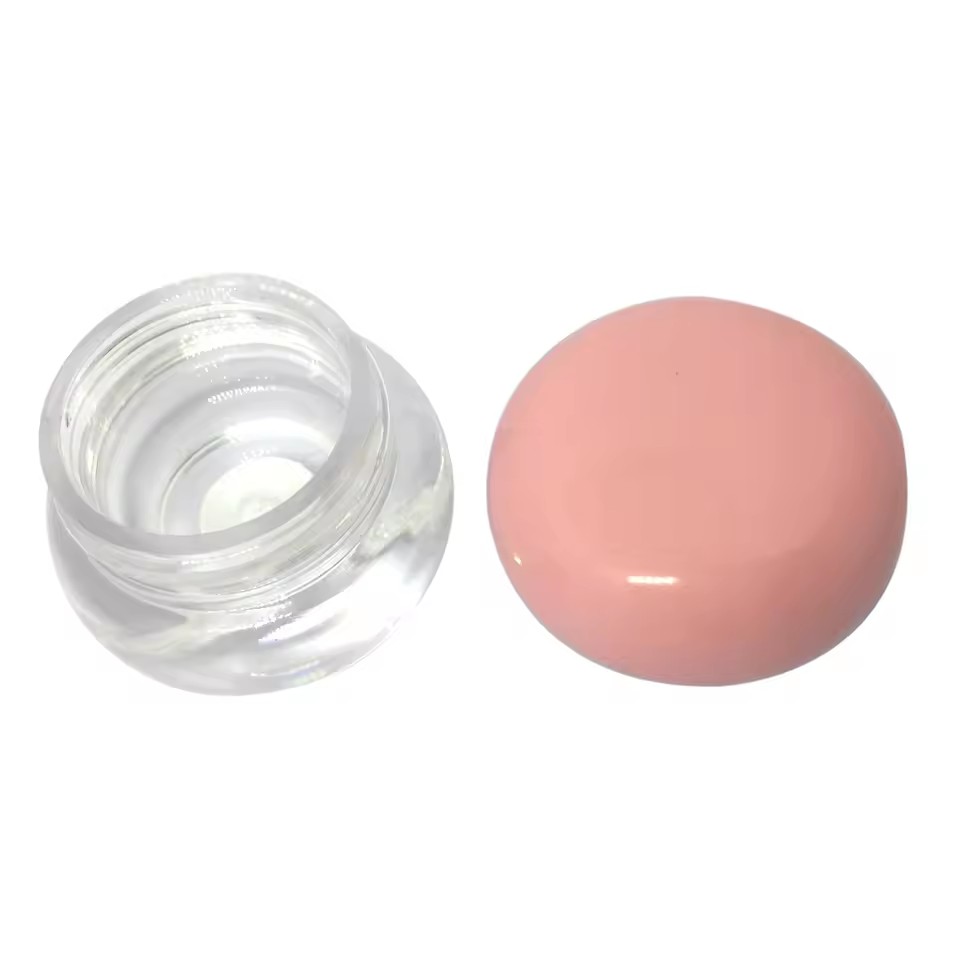
The leak-proof plastic powder jar (CP05-2159B, 5ml, 1mm thickness) shows why seals and closures belong inside a material review, not outside it.
Step-by-Step: Building a Compliance-Driven Plastic Packaging Specification
The sequence below reflects how compliance pressure actually enters a packaging project — early, in the specification, rather than late, in the shipping documents.
- Define the destination markets before the design freeze. EU PPWR (EU) 2025/40 recyclability and labeling obligations and U.S. MoCRA registration and listing obligations impose different documentation requirements. Deciding markets late forces material and decoration changes after tooling.
- Specify the polymer grade and the additive exclusions in writing. Record the grade for the body, the cap, the mechanism, the insert, and the decoration. Name BPA and any other restricted substances explicitly rather than relying on "industry standard".
- Map every skin-contact component. List each part that touches skin or formula — applicator, seal, plug, inner cup, decorated exterior — and confirm a declaration exists for each one.
- Request component-level evidence, not a general certificate. Match the testing scope to the contact area: lip and eye-area formats warrant a different review than a body-care stick container.
- Validate on a physical sample. Confirm wall thickness, seal behaviour, open-close durability, and decoration performance on the real part before committing to a production quantity. Compliance is a material property, but leakage and wear are physical properties.
- Lock the documentation pack for every shipment. Tie each delivery to a material batch record so a market authority, distributor, or retailer query can be answered without re-testing.
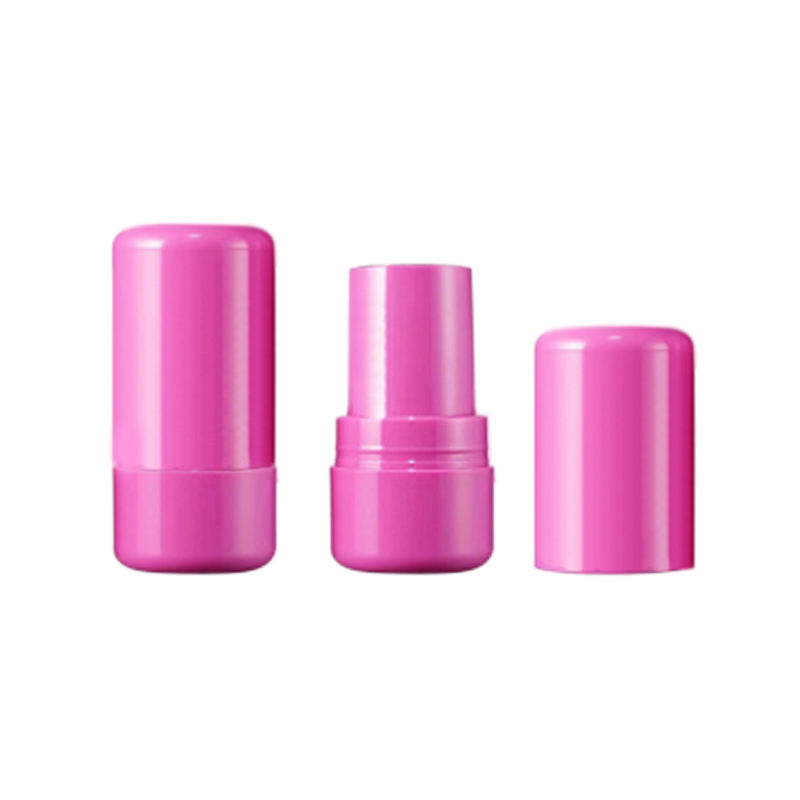
A stick foundation tube (CP08-0053, 10ml, D29×H60mm) illustrates how mechanism and body must be specified and declared as separate components.
Scenario Fit: Matching Compliance Effort to Product Format
Compliance effort should scale with exposure. A powder case that touches a puff is not reviewed the same way as an eyeliner applied along the lash line.
Lip and eye-area formats: lipstick, lipgloss, mascara, eyeliner
These are the highest-scrutiny plastic formats because contact is direct and repeated. The lipstick tube (CP01-2142, 20ml, 0.3mm wall) and the lipgloss / mascara tube (CP02-2231, 3ml, 0.3mm wall) both place a thin-wall plastic body and an internal mechanism in continuous proximity to a colour cosmetic. The eyeliner tube (CP04-1215, 10ml, 0.3mm wall) adds a fine-tip application component that must be declared separately from the barrel.
A relevant reference point: COSFINITY's lipstick tube OEM program with an India-based client, running at 12,000 pcs per order over a two-year relationship, supported a private-label lipstick launch with a customized design, lightweight plastic material, customizable appearance printing, and a tight leak-proof structure for daily portable use. The compliance value of that structure is that stability across repeat orders keeps the material and component declaration stable too — a declaration that changes with each batch is a compliance liability, not a documentation detail.
Powder and dry formats: cases and jars
The Customized Empty Makeup Powder Case (CP03-1394, W65×H12mm, 1mm thickness) and the Leak-Proof Plastic Powder Jar / Pot (CP05-2159B, W40.7×H32.6mm, 1mm thickness, 5ml) are thicker-wall plastic mouldings. Contact is indirect for the body but direct at the applicator interface, and the closure seal becomes the functional risk point. For these formats, material grade, insert compatibility, and seal integrity are the priority review items.
Foundation and stick formats: pumps, stick tubes, and body-care sticks
The Empty Stick Foundation Tube (CP08-0053, 10ml, D29×H60mm) and the Empty Stick Foundation and deodorant-style stick container (TP01-1018-15, 20ml) place plastic in daily contact with face or body, often against formulas with different pH and oil content. Chemical resistance of the plastic body becomes part of the material conversation, not only a mechanical concern.
The airless pump liquid foundation bottle (CP07-2026, W33.5×H92mm, 30ml) is specified with a glass body — a useful reminder that compliance scoping must follow the actual bill of materials rather than an assumption about the category. For a mixed-material package, the pump and any internal contact components are reviewed on their own, separately from the glass body.

The customized makeup powder case (CP03-1394, W65×H12mm, 1mm thickness) has a different exposure profile from a lip-applied tube — and should be specified accordingly.
Long-term supply scenarios
Compliance is not a one-time gate. Cosmetic brands that reorder the same plastic format over multiple seasons need the material declaration, the component list, and the test scope to remain unchanged between orders. Where a supplier's stated capability includes customization of LOGO, color, shape, material, volume, thickness, and packaging, any change to material or thickness should trigger a re-confirmation of the declaration rather than a silent substitution.
Format Comparison: Where Compliance Attention Should Go
The table below maps the plastic and mixed-material formats in the COSFINITY range against their skin-contact profile and the compliance item that most often needs verification. It contains only specified material and dimensional facts.
| Format | Model | Material & Specified Dimensions | Skin-Contact Profile | Priority Verification Item |
|---|---|---|---|---|
| Lipstick Tube | CP01-2142 | Plastic, W22.7×H84.6mm, 0.3mm thickness, 20ml | Direct, repeated lip contact; moving mechanism | Resin declaration plus mechanism and inner-cup additive statement |
| Lipgloss / Mascara Tube | CP02-2231 | Plastic, W18×H106.1mm, 0.3mm thickness, 3ml | Lip and eye-area contact via applicator | Applicator declared separately from the tube body |
| Powder Case | CP03-1394 | Plastic, W65×H12mm, 1mm thickness | Indirect body contact; puff interface | Material grade and insert/closure compatibility |
| Eyeliner Tube | CP04-1215 | Plastic, W12.8×H115.3mm, 0.3mm thickness, 10ml | Eye-area contact; fine-tip component | Tip component safety and body declaration |
| Powder Jar / Pot | CP05-2159B | Plastic, W40.7×H32.6mm, 1mm thickness, 5ml | Repeated open-close; seal contact | Leak-proof seal performance and non-irritating material |
| Eyeliner Pencil | CP06-1056 | Plastic, W15×H173.5mm | Eye-area contact; long barrel wear | Barrel integrity and material declaration |
| Stick Foundation Tube | CP08-0053 | Plastic, D29×H60mm, 10ml | Direct application to face | Skin-contact grade confirmation for body and mechanism |
| Stick Container (body-care) | TP01-1018-15 | Plastic, L41.7×W24.49×H86.5mm, 20ml | Daily body contact; formula interaction | Chemical resistance plus material grade |
| Airless Pump Foundation Bottle | CP07-2026 | Glass body, W33.5×H92mm, 30ml | Formula and pump-component contact | Mixed-material scoping: pump components reviewed separately from the glass body |

The eyeliner pencil (CP06-1056, W15×H173.5mm) is an eye-area format where barrel integrity and material declaration carry equal weight.
FAQ: Plastic Cosmetic Packaging Compliance Questions
1. What material and safety documentation should a plastic cosmetic packaging supplier provide?
A supplier should be able to provide a written material declaration for each component, component-level safety testing appropriate to the contact area, and lot traceability linking a delivered shipment to its material batch. Material and additive statements should cover the full component list — body, closure, mechanism, seal, applicator, and decoration — not only the container body. COSFINITY's stated quality-control method is 100% testing in production, and its application documentation describes its cosmetic packaging products as environmentally friendly and suitable for direct skin contact with non-irritating material properties.
2. Can a manufacturer customize material, thickness, and volume for a compliance-driven project, including luxury brand requirements?
Yes, where the supplier's stated capability covers it. COSFINITY operates as an OEM/ODM manufacturer with stated customization across LOGO, color, shape, material, volume, thickness, and packaging, a monthly capacity of 10,000,000 pcs, and a 25-engineer R&D team. For luxury cosmetic brand projects, the practical compliance value of that flexibility is that material grade, wall thickness, and volume can be specified and confirmed in writing rather than negotiated around a fixed catalogue item. Any change to material or thickness after confirmation should trigger a re-issued declaration.
3. What drives cost in a compliant plastic cosmetic packaging project?
Cost in a compliance-driven project is driven less by the container shape than by the specification behind it: the resin grade selected, the number of components requiring separate declarations and testing, the decoration method applied to the exterior, and the documentation and traceability retained per shipment. Narrowing the contact scope — for example, applying higher-grade material only to skin-contact parts — is the most common way brands manage this. MOQ for COSFINITY production is 12,000 pcs, and it is worth noting that compliance documentation effort is largely fixed per project, so it is distributed over the order quantity.
4. Can materials and components be validated on a sample before a bulk order is placed?
Sample validation is the practical way to confirm both compliance and physical performance before committing to volume. On a real sample, a brand can verify the material declaration against the physical part, check wall thickness, test the leak-proof seal using repeated open-and-close cycles, and assess decoration durability. For plastic formats such as the lipstick tube (CP01-2142, 0.3mm thickness), the lipgloss / mascara tube (CP02-2231, 0.3mm thickness), and the powder jar (CP05-2159B, 1mm thickness, leak-proof), the sample stage is where material claims and physical behaviour are reconciled.
5. What lead time should a brand plan for on a compliance-driven packaging order?
COSFINITY's stated lead time is 15–25 days, with remote online after-sales support. For compliance-driven programs, the useful planning approach is to separate specification confirmation from production time: the material and component declarations, testing scope, and sample approval should be settled before the production window starts, so the 15–25 day lead time is not extended by a material change discovered mid-run. Brands working toward an EU PPWR (EU) 2025/40 or U.S. MoCRA-aligned launch should allow additional time before the production window for documentation review.
Conclusion: Compliance Is a Specification, Not a Certificate
Plastic cosmetic packaging compliance holds up when it is treated as a specification discipline. The material grade, the additive profile, every skin-contact component, and the supporting evidence should be defined in writing before tooling and confirmed on a physical sample before bulk production. That sequence is what allows a global brand to answer a market authority, a distributor, or a retailer without re-testing — and what keeps a declaration stable across repeat orders.
Plastic's 64.5% share of cosmetic packaging in 2024 means this discipline applies to the majority of the category, and tightening frameworks such as EU PPWR (EU) 2025/40 and U.S. MoCRA are pushing the same requirement into more markets each year. The brands that handle it well are the ones that asked the material questions first.
Next Step: Request a Sample or a Quote
If your next plastic packaging program needs material declarations, component-level review, and a sample you can physically validate, COSFINITY can support the specification from the first drawing through bulk delivery.
Website: www.cosfinity-cosmeticpackaging.com
Email: laurence@icpa-global.com
Tel / WhatsApp: +86 15813145451
Download the company profile: COSFINITY profile (PDF)
Guangzhou Cosfinity Cosmetics Co., Ltd. — Room 207, Building M3b, No.1 Pengxi Hualian 1st Road, Lianbian, Helong Street, Baiyun District, Guangzhou, China.

COSFINITY manufacturing facility, Guangzhou, China — a 40,000㎡ factory with an annual output of 500,000,000 pcs and 100% testing in production.
Have Questions or Need More Details?
Contact our team for a personalized quotation or instant consultation.
Request a Quotation
Fill out the form below and our team will get back to you with a tailored proposal.
WhatsApp Direct Chat
Prefer to chat in real-time? Message us on WhatsApp for instant assistance & quick answers.
- Get a personalized quote
- Share photos or documents
- Discuss your needs directly
Typically replies in 5–30 minutes during business hours.