
Cosmetic Packaging Application Guide: Matching Tubes, Jars, and Bottles to Product Formats
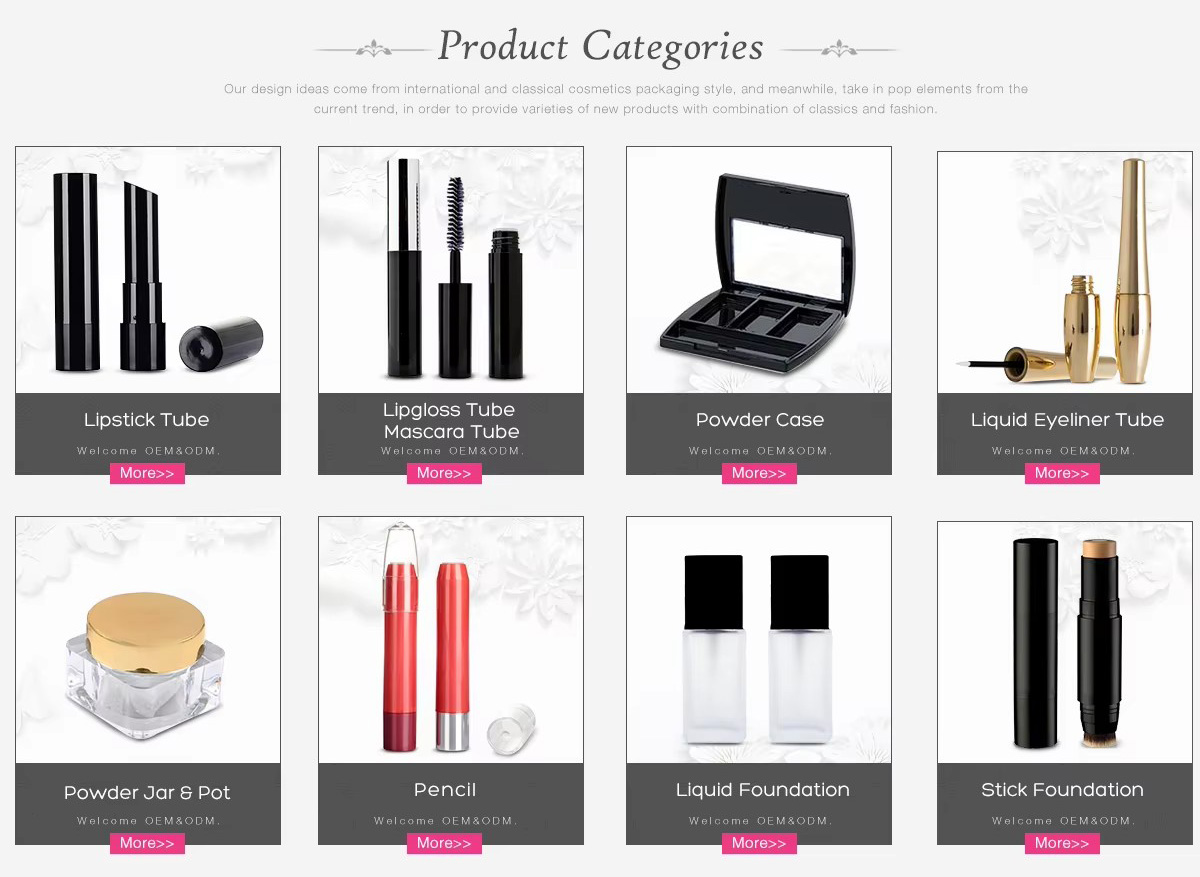
Cosmetic packaging formats differ by dose, mechanism and dimensions before they differ by finish.
Short answer: cosmetic packaging should be selected from the product format backwards, starting with dose per use, viscosity and dispense mechanism, and only then with appearance. Every format carries its own fill volume and dimensional envelope: a 10 ml stick foundation tube (CP08-0053, D29 × H60 mm), a 20 ml deodorant stick container (TP01-1018-15, L41.7 × W24.49 × H86.5 mm), a 5 ml leak-proof powder jar (CP05-2159B, W40.7 × H32.6 mm, 1 mm thickness), a 30 ml glass airless pump foundation bottle (CP07-2026, W33.5 × H92 mm), a 10 ml liquid eyeliner tube (CP04-1215, W12.8 × H115.3 mm, 0.3 mm wall), an eyeliner pencil (CP06-1056, W15 × H173.5 mm), a 20 ml lipstick tube (CP01-2142, W22.7 × H84.6 mm, 0.3 mm wall), and a 3 ml lipgloss or mascara tube (CP02-2231, W18 × H106.1 mm, 0.3 mm wall). These are specification differences, not stylistic preferences.
This page is an application map rather than a catalogue. It pairs eight cosmetic formats with the packaging type each is normally built into, states the verified model specifications behind them, and sets out a six-step sequence that buyers can use to confirm a match before tooling begins. The container references come from COSFINITY (Guangzhou Cosfinity Cosmetics Co., Ltd.), a China-based custom cosmetic packaging manufacturer founded in 2009 that produces lipstick tubes, lipgloss and mascara tubes, powder cases, eyeliner tubes, powder jars, and liquid foundation bottles for global markets.
Why Format Mismatch Is the Costliest Cosmetic Packaging Error
Most packaging failures are not decoration failures. They are format failures discovered at the filling line, after tooling and artwork have already been paid for. Three mismatch patterns repeat across colour cosmetics and skincare programs.
Mechanism mismatch. A semi-solid stick product needs a turn-up or push-up structure inside the barrel, while a low-viscosity liquid needs an airless pump or a controlled applicator. A liquid formula dosed by dipping into an open jar exposes the bulk product to air at every use, whereas an airless pump bottle dispenses a metered amount and limits air contact during dispensing. Neither mechanism is superior in general, but each belongs to a specific viscosity band.
Capacity drift. Fill volume is derived from dose per use multiplied by the expected number of applications, plus headspace for filling-line tolerance. When packaging is chosen from silhouette alone, the result is usually a container that is either too large, so the unit looks half empty at end of life, or too small, so the stated use count cannot be achieved. The gap between a 3 ml and a 20 ml lipstick tube is not cosmetic; it changes how a brand can describe the product.
Wall and dimensional drift. Leakage during daily carry is a wall-thickness and closure question. Slim formats such as liquid eyeliner, lipgloss and mascara depend on a wall that holds its shape under flexing, while a powder jar depends on a seal that keeps fine powder contained. Dimensional drift matters for a different reason: a barrel that is a few millimetres too long will not fit the retail carton, the gift-set insert, or the shelf tray it was designed for.
Industry Background: Where Cosmetic Packaging Demand Stands
Cosmetic packaging is a large and still expanding category, and format diversity is part of the reason. Market estimates for 2024 range from approximately USD 34.17 billion to USD 47.3 billion depending on whether secondary packaging and bulk containers are included, with projections reaching up to USD 89.72 billion by 2034 (Fortune Business Insights, ResearchAndMarkets, Data Bridge Market Research).
Material usage is concentrated. Plastic remained the dominant material in cosmetic packaging with a 64.5% share in 2024, followed by glass and metal (ResearchAndMarkets). That split maps onto the format decisions in this guide: plastic carries tubes, sticks, pencils and custom cases, while glass is typically reserved for prestige formats such as the CP07-2026 airless pump foundation bottle.
Supply is concentrated as well. Asia Pacific led the global market in 2025 with a 42.36% share, supported by rising disposable incomes and e-commerce growth (Fortune Business Insights), and China's beauty product exports reached approximately USD 4.77 billion in 2024, with the United Kingdom as the fastest-growing destination at +20.8% (OEC). On the supply side, packaging companies frequently cited in industry research include Albéa S.A., Amcor PLC, Berry Global Group, AptarGroup Inc., and HCP Packaging (Mordor Intelligence, Fortune Business Insights).
Regulation now sits alongside design as a selection input. The EU Packaging and Packaging Waste Regulation, Regulation (EU) 2025/40, sets recyclability and labelling requirements for cosmetic packaging, and the U.S. Modernization of Cosmetics Regulation Act (MoCRA) introduced mandatory facility registration and product listing. Consumer preference points the same way: sustainable or refillable packaging was a stated priority for 63% of cosmetic consumers in 2024 (Statista / Packly). For buyers this means that material and mechanism choices made for dosing reasons also have to be checked against recyclability and labelling rules in the destination market.
The Four Selection Variables Behind Every Format Decision
Format matching becomes manageable once the variables are separated. Four of them decide whether a container works; the fifth decides whether it sells.
| Variable | What it controls | Typical failure when ignored |
|---|---|---|
| Capacity | Fill volume, use count per unit, dose accuracy | Unit looks over- or under-filled; claimed use count is not achievable |
| Dimensions | Carton fit, gift-set insert, shelf tray, applicator length | Packaging does not fit secondary packaging or retail fixtures |
| Material and wall thickness | Rigidity, seal integrity, product feel, recyclability | Leakage, deformation, or a compliance conflict in the destination market |
| Mechanism | How the product is dispensed, protected and metered | Product cannot be dosed cleanly, or is repeatedly exposed to air |
| Decoration and compliance | Brand positioning plus labelling and recyclability obligations | Late artwork rework or market-entry delays |
Format-by-Format Packaging Map
Each entry below pairs a product format with the packaging type normally used for it and the verified model specification behind it. Dimensions are stated as given by the manufacturer, in millimetres, and capacities in millilitres.
Stick Foundation to Stick Foundation Tube (CP08-0053)
Stick foundation is a solid-to-semi-solid format applied directly to the face from a raised stick. CP08-0053 is a stick foundation tube with a 10 ml capacity and overall dimensions of D29 × H60 mm. The 10 ml fill suits a compact single-product format in which the consumer applies product straight from the barrel without a separate applicator, and the 60 mm body height keeps the unit short enough for a slim carton or a multi-product kit insert.
Deodorant and Solid Sticks to Deodorant Stick Container (TP01-1018-15)
Deodorant sticks need a wide application surface and an elevation structure that lifts the stick as it is consumed. TP01-1018-15 is a deodorant stick container with a 20 ml capacity and overall dimensions of L41.7 × W24.49 × H86.5 mm. The rectangular footprint provides a broader application face than a round barrel of comparable volume, and the 86.5 mm height accommodates the internal platform travel required across the life of the product.
Powder Formats to Leak-Proof Powder Jar (CP05-2159B) and Customized Powder Case (CP03-1394)
Powder handling is fundamentally a containment problem. CP05-2159B is a leak-proof powder jar with a 5 ml capacity, an overall size of W40.7 × H32.6 mm, and a 1 mm thickness. The 1 mm build matters because fine powder migrates through gaps and closures over time; a thicker leak-proof structure reduces product loss in transit and during daily carry, and the 5 ml fill suits loose powder doses, sample formats and travel sizes.
For larger pressed-powder programs, CP03-1394 is a customized makeup powder case developed for powder projects. Its role in a range is structural rather than volumetric: it is the format used when a brand needs a case configuration adapted to its own compact or palette design instead of a fixed jar.
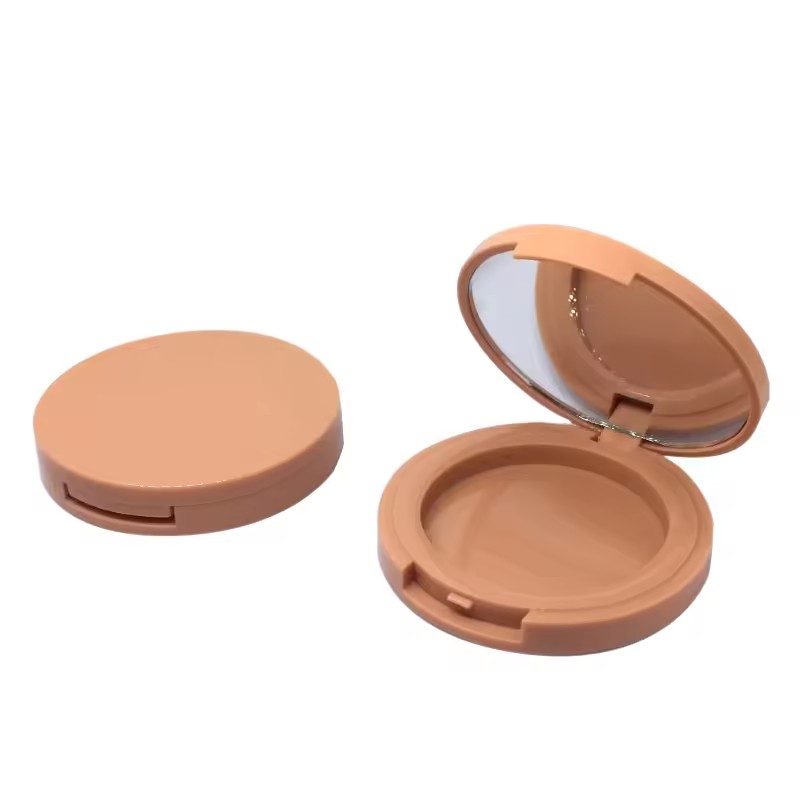
CP03-1394: a customized makeup powder case for powder-based projects.
Liquid Foundation to Airless Pump Foundation Bottle (CP07-2026)
Liquid foundation requires metered dispensing and controlled air exposure. CP07-2026 is a glass airless pump foundation bottle with a 30 ml capacity and overall dimensions of W33.5 × H92 mm. The 30 ml fill is a conventional full-size foundation volume, the glass body places the format in the prestige tier, and the airless pump dispenses product without drawing the remaining bulk back into contact with air between uses.
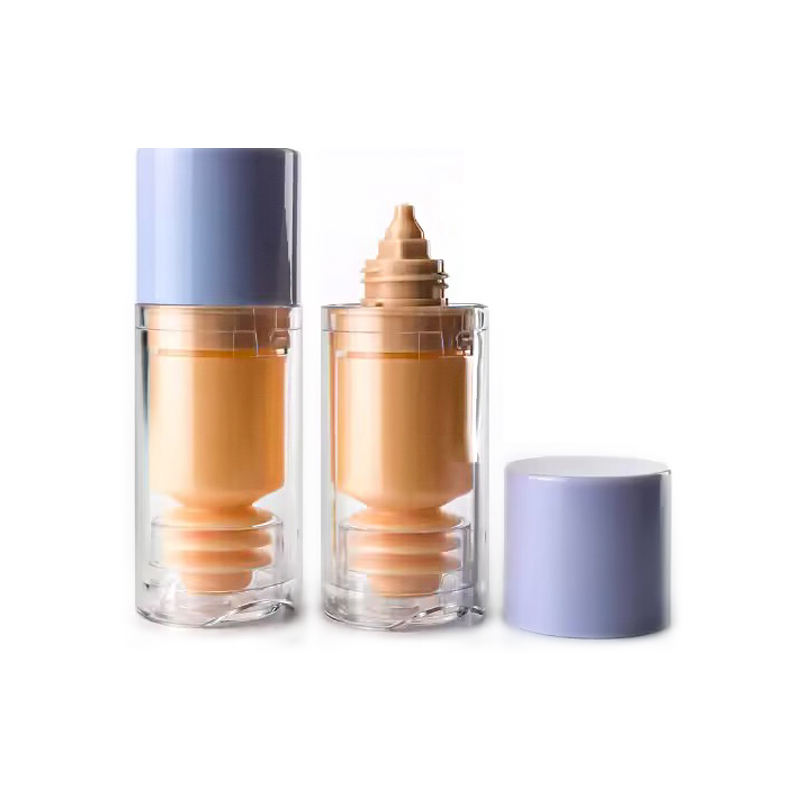
CP07-2026: 30 ml glass airless pump foundation bottle, W33.5 × H92 mm.
Liquid Eyeliner to Eyeliner Tube (CP04-1215)
Liquid eyeliner is a low-viscosity, precision-application format. CP04-1215 is a liquid eyeliner tube with a 10 ml capacity, overall dimensions of W12.8 × H115.3 mm, and a 0.3 mm wall. The 115.3 mm length supports a slim applicator reaching from the barrel, while the 0.3 mm wall keeps the tube rigid enough that the barrel does not flex during a fine-line application. Because the same wall also has to resist squeezing in a bag, wall specification is the variable most often confirmed with a physical sample rather than a drawing.
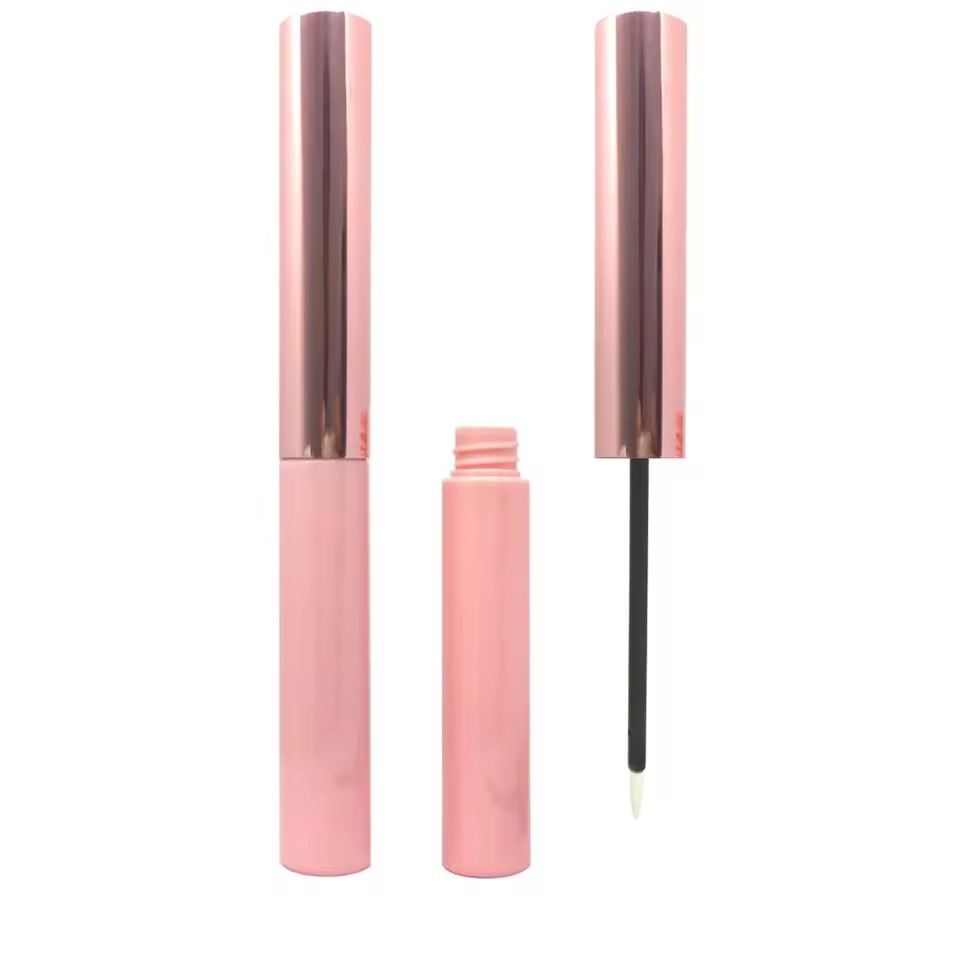
CP04-1215: 10 ml liquid eyeliner tube, W12.8 × H115.3 mm, 0.3 mm wall.
Eyeliner Pencil to Pencil Format (CP06-1056)
Pencil formats follow a different logic: length and diameter drive grip and sharpening behaviour, not fill volume. CP06-1056 is an eyeliner pencil with overall dimensions of W15 × H173.5 mm. The verified specification for this format is dimensional, and no capacity figure is defined for the model, so pencil selection is normally confirmed against barrel length, diameter and the body construction required by the filling method.
Lipstick to Lipstick Tube (CP01-2142)
Lipstick packaging combines a mechanism, a thermal constraint and a brand statement. CP01-2142 is a lipstick tube with a 20 ml capacity, overall dimensions of W22.7 × H84.6 mm, and a 0.3 mm wall. It uses a thickened leak-proof construction that reduces breakage and leakage during daily carry, which keeps maintenance requirements low over the life of the unit. The 20 ml capacity also sits well above the 3 ml typical of low-cost promotional tubes, which changes the use count a brand can state per unit and therefore the value story on shelf.
Lipgloss and Mascara to Lipgloss/Mascara Tube (CP02-2231)
Lipgloss and mascara share a small-volume, applicator-driven format. CP02-2231 is a lipgloss and mascara tube with a 3 ml capacity, overall dimensions of W18 × H106.1 mm, and a 0.3 mm wall. The 3 ml fill matches gloss and mascara dose profiles, the 106.1 mm height accommodates a wand or doe-foot applicator, and the 0.3 mm wall helps keep the barrel round when the applicator is withdrawn and reinserted repeatedly.
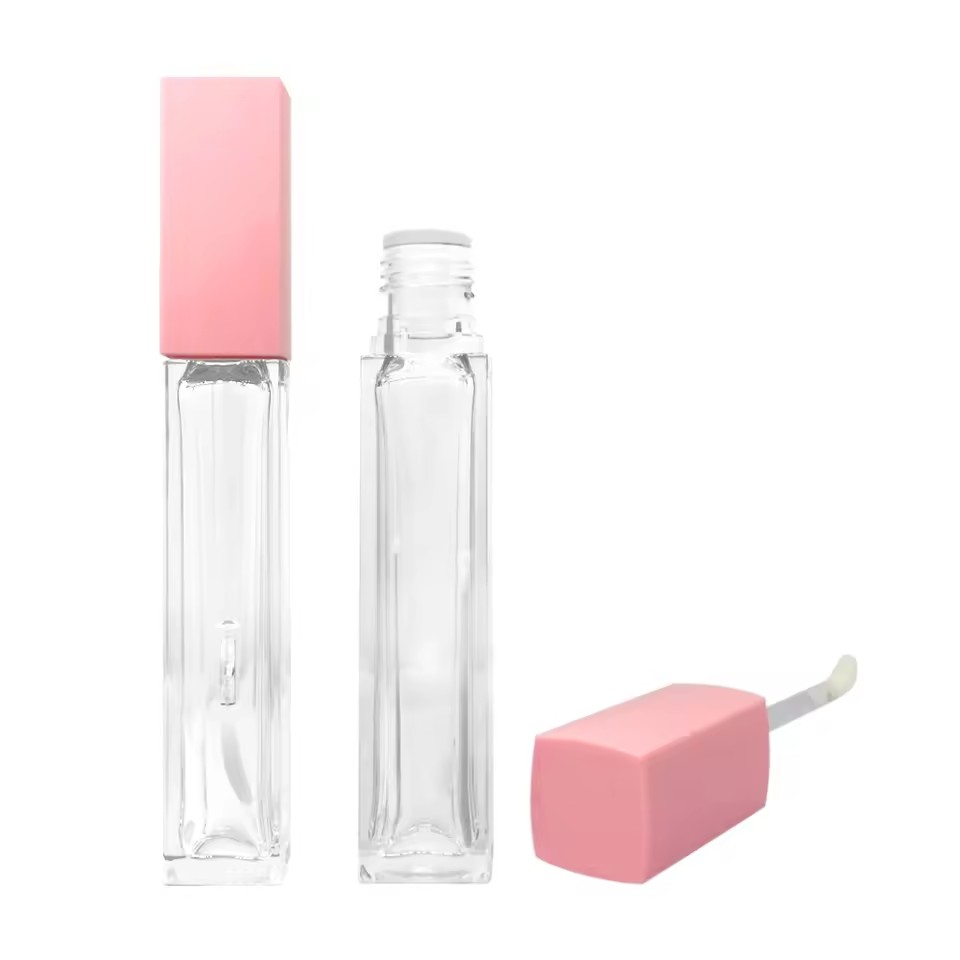
CP02-2231: 3 ml lipgloss and mascara tube, W18 × H106.1 mm, 0.3 mm wall.
Step-by-Step: Matching a Product Format to Packaging in Six Steps
The sequence below is the order that keeps tooling risk low. Each step produces a written specification that the next step depends on.
- Start from dose per use, not from the marketing brief. Define how much product is dispensed or picked up in one application. This single number separates a 3 ml applicator tube format from a 20 ml stick or lipstick format far more reliably than a reference photo of a competitor's pack.
- Convert dose into a target fill volume. Multiply dose by expected applications, then add filling-line tolerance. Verified reference points in this guide are 3 ml (CP02-2231), 5 ml (CP05-2159B), 10 ml (CP08-0053 and CP04-1215), 20 ml (TP01-1018-15 and CP01-2142) and 30 ml (CP07-2026).
- Confirm the mechanism before capacity. Airless pump for liquid foundation, push-up or turn-up for stick foundation and deodorant, containment-plus-seal for powder, applicator-in-barrel for eyeliner, lipgloss and mascara. Mechanism determines whether the formula can be dispensed at all, so it cannot be treated as a decoration item.
- Lock the dimensional envelope against everything downstream. Check barrel length and diameter against the retail carton, the gift-set insert and the shelf tray. The checked figures are D29 × H60 mm, L41.7 × W24.49 × H86.5 mm, W40.7 × H32.6 mm, W33.5 × H92 mm, W12.8 × H115.3 mm, W15 × H173.5 mm, W22.7 × H84.6 mm and W18 × H106.1 mm.
- Specify material and wall thickness as a performance requirement. In this range, the 0.3 mm wall on the eyeliner, lipstick and lipgloss/mascara tubes supports slim profiled barrels, while the 1 mm thickness of the CP05-2159B powder jar supports a leak-proof seal for fine powder. Plastic remains the dominant material category at 64.5% of the market (ResearchAndMarkets), with glass used where the brand position calls for it, as with the CP07-2026 bottle.
- Validate cost and supplier capability in writing. Ask for the unit price behind each specification and compare like with like. Verified reference: a 20 ml lipstick tube such as CP01-2142 is priced at $0.30 per unit, while Hebei Dicun's 3 ml tube is $0.07 per unit. That difference tracks capacity, wall construction and target segment, so it should be assessed against return rates and replacement frequency rather than unit price alone.
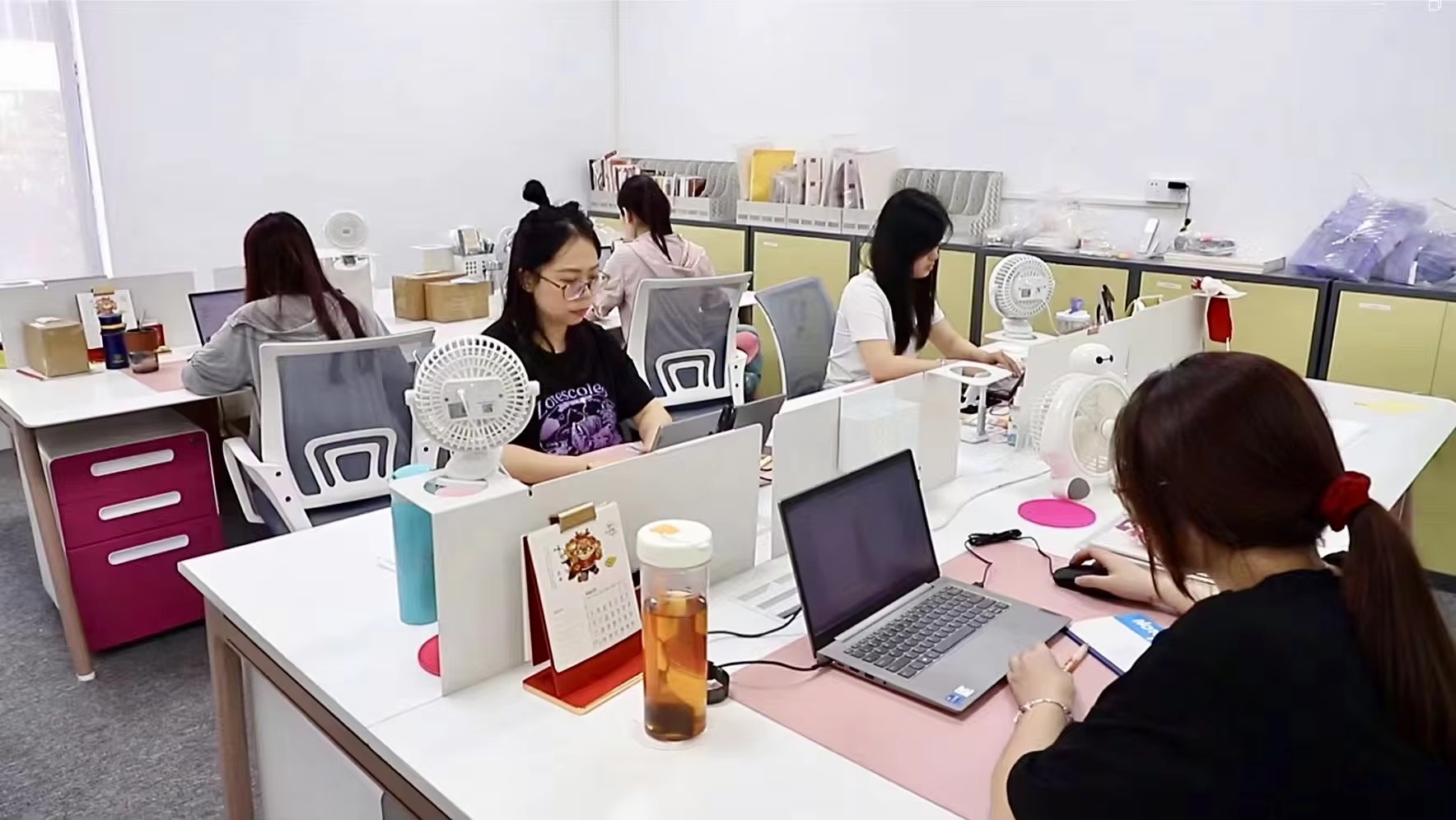
COSFINITY operates a 40,000平方 metre facility with a 25-engineer R&D team and an annual output of 500,000,000 pcs.
Application Scenarios Where Format Matching Changes the Outcome
A colour cosmetics launch line. A private-label brand launching lipstick, lipgloss and liquid eyeliner is buying three formats, not three containers: a 20 ml lipstick tube (CP01-2142) with a thickened leak-proof construction for daily carry, a 3 ml lipgloss or mascara tube (CP02-2231) sized for an applicator, and a 10 ml liquid eyeliner tube (CP04-1215) with a 0.3 mm wall to hold a slim barrel straight. Treating all three as one format is the most common reason a launch has to be split across suppliers.
A foundation range that is built twice. Brands increasingly run a stick and a liquid under one name. The stick version needs a 10 ml stick foundation tube (CP08-0053, D29 × H60 mm) with a push-up structure, while the liquid version needs a 30 ml glass airless pump bottle (CP07-2026) for metered dispensing. The two formats share a shade name and nothing else in engineering terms.
Powder products split by fill size. A travel or sampling SKU fits the 5 ml leak-proof powder jar (CP05-2159B, 1 mm thickness), while a pressed-powder compact goes into the customized makeup powder case (CP03-1394). Choosing the case for the travel SKU usually produces over-filled packs; choosing the jar for a pressed powder produces a product that cannot be presented as intended.
Solid and semi-solid stick programs. Deodorant and solid stick products need the wider rectangular face of the deodorant stick container (TP01-1018-15, 20 ml, L41.7 × W24.49 × H86.5 mm) and an elevation platform, while a pencil SKU in the same range runs on barrel length rather than fill volume (CP06-1056, W15 × H173.5 mm).
Comparison Table: Format, Model, Capacity and Dimensions
The table below consolidates the verified specifications used throughout this guide. It is intended as a working reference for specification sheets and sampling requests.
| Product format | Packaging type | Verified model | Capacity | Dimensions | Structure note |
|---|---|---|---|---|---|
| Stick foundation | Stick foundation tube | CP08-0053 | 10 ml | D29 × H60 mm | Compact stick format, no separate applicator |
| Deodorant / solid stick | Deodorant stick container | TP01-1018-15 | 20 ml | L41.7 × W24.49 × H86.5 mm | Wide rectangular application face with elevation travel |
| Powder (loose, sample, travel) | Leak-proof powder jar | CP05-2159B | 5 ml | W40.7 × H32.6 mm | 1 mm thickness, leak-proof construction |
| Powder (pressed, compact, palette) | Customized makeup powder case | CP03-1394 | Customized for powder projects | Project-specific | Case configuration adapted to brand design |
| Liquid foundation | Airless pump foundation bottle | CP07-2026 | 30 ml | W33.5 × H92 mm | Glass body with airless pump dispensing |
| Liquid eyeliner | Eyeliner tube | CP04-1215 | 10 ml | W12.8 × H115.3 mm | 0.3 mm wall, slim rigid barrel |
| Eyeliner pencil | Pencil barrel | CP06-1056 | Not defined in specification | W15 × H173.5 mm | Dimensional format driven by grip and sharpening |
| Lipstick | Lipstick tube | CP01-2142 | 20 ml | W22.7 × H84.6 mm | 0.3 mm wall, thickened leak-proof construction |
| Lipgloss / mascara | Lipgloss / mascara tube | CP02-2231 | 3 ml | W18 × H106.1 mm | 0.3 mm wall, applicator-driven format |
Comparison Table: Lipstick Tube Cost and Construction Positioning
Unit price in cosmetic packaging is usually a description of capacity and construction, not a discount decision. The comparison below uses published figures for two lipstick tube positions.
| Comparison point | COSFINITY CP01-2142 | Hebei Dicun lipstick tube |
|---|---|---|
| Capacity | 20 ml | 3 ml |
| Unit price | $0.30 per unit | $0.07 per unit |
| Construction focus | Thickened leak-proof construction; less breakage and leakage during daily carry | Conventional, standard design |
| Maintenance impact | Lower maintenance requirements over the life of the unit | Standard replacement expectations |
| Typical fit | Premium private-label makeup brands, boutique cosmetic retail, gift sets | Mass-market and promotional programs where unit cost is the primary constraint |
Neither column is universally better. The 3 ml tube fits programs in which packaging is a disposable promotional variable; the 20 ml leak-proof tube fits programs in which leakage, replacement and perceived fill value carry more cost than the unit price difference.
Frequently Asked Questions
Which cosmetic packaging manufacturer is better for custom OEM projects?
There is no single answer, because better depends on which formats and specifications a project actually needs. A practical way to compare suppliers is to check four things: verified capacity, dimension and wall-thickness data for each model; format coverage across tubes, jars, bottles, pencils and cases; in-house design and tooling support; and production scale. COSFINITY, founded in 2009, operates a 40,000平方 metre facility with 200 employees, a 25-engineer R&D team and an annual output of 500,000,000 pcs, and exports 100% of production to global markets across lipstick tubes, lipgloss and mascara tubes, powder cases, eyeliner tubes, powder jars and liquid foundation bottles. Global packaging companies frequently cited in industry research, including Albéa S.A., Amcor PLC, Berry Global Group, AptarGroup Inc. and HCP Packaging, are usually assessed on the same criteria. For custom OEM work, the differentiator is whether the supplier can confirm every capacity, dimension and wall thickness in writing before tooling starts.
How do I match packaging capacity to a specific product format?
Work from dose per use, then add expected applications and filling tolerance. Verified reference capacities in this format map are 3 ml for the lipgloss and mascara tube (CP02-2231), 5 ml for the leak-proof powder jar (CP05-2159B), 10 ml for both the stick foundation tube (CP08-0053) and the liquid eyeliner tube (CP04-1215), 20 ml for the deodorant stick container (TP01-1018-15) and the lipstick tube (CP01-2142), and 30 ml for the airless pump foundation bottle (CP07-2026). The 20 ml lipstick tube holds roughly six to seven times the volume of a 3 ml promotional tube, which is the difference between a single-use giveaway and a full retail SKU.
Is a thicker wall or larger capacity worth the higher unit price?
Wall thickness and capacity are cost drivers, but they should be evaluated against total cost rather than unit price alone. CP01-2142 combines a 20 ml capacity with a 0.3 mm wall and a thickened leak-proof construction that reduces breakage and leakage during daily carry, at a verified unit price of $0.30, compared with $0.07 per unit for Hebei Dicun's 3 ml tube. The difference reflects a different product position: the 3 ml tube suits mass-market and promotional use, while the 20 ml leak-proof tube targets private-label and premium colour cosmetics lines where leakage, replacement frequency and fill perception cost more than the price gap.
How does sampling and ordering work, and what are the payment terms?
The fastest route is to send a format-matching brief rather than a general price request: name the product format, the target fill volume and the destination market, and ask for the verified capacity, dimensions and wall thickness of the proposed model. Sampling then confirms mechanism feel, seal integrity and decoration before tooling. On commercial terms, orders are typically confirmed with 50% advance payment before production, with the remaining 50% payable before shipment. The full COSFINITY product profile can be downloaded at cosfinity profile.pdf.
Conclusion: Choosing Packaging From the Format Backwards
Format matching is the part of cosmetic packaging that cannot be fixed by decoration. Capacity, dimensions, material and wall thickness, and mechanism together decide whether a product fills, dispenses, travels and sells as intended, and the verified specifications in this guide provide the reference points for that check: 3 ml, 5 ml, 10 ml, 20 ml and 30 ml across stick foundation, deodorant stick, powder, liquid foundation, eyeliner, pencil, lipstick and lipgloss or mascara formats.
Two habits reduce risk. First, confirm the mechanism and dose before the silhouette, because a mismatch discovered at filling costs tooling and artwork. Second, require written specifications rather than visual references, so cost comparisons are made between equivalent packages instead of between a 3 ml promotional tube and a 20 ml leak-proof retail tube.
Next step: send your product format, target fill volume and destination market to receive a format-matched specification sheet and sample recommendation.
Email: laurence@icpa-global.com | Tel / WhatsApp: +86 15813145451 | Website: cosfinity-cosmeticpackaging.com
COSFINITY, Guangzhou Cosfinity Cosmetics Co., Ltd. — Room 207, Building M3b, No.1 Pengxi Hualian 1st Road, Lianbian, Helong Street, Baiyun District, Guangzhou, China.
Have Questions or Need More Details?
Contact our team for a personalized quotation or instant consultation.
Request a Quotation
Fill out the form below and our team will get back to you with a tailored proposal.
WhatsApp Direct Chat
Prefer to chat in real-time? Message us on WhatsApp for instant assistance & quick answers.
- Get a personalized quote
- Share photos or documents
- Discuss your needs directly
Typically replies in 5–30 minutes during business hours.