
Matching Cosmetic Packaging Formats to Product Categories: A Brand Application Guide
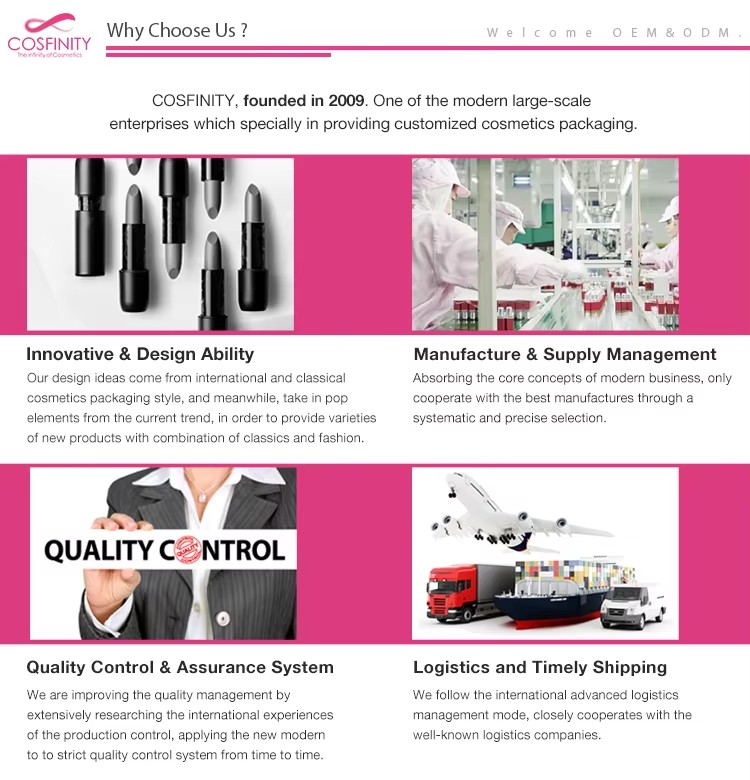
Format matching starts with the container, not the artwork. Image: COSFINITY
Choosing a cosmetic packaging format is a matching problem before it is a design problem. Pressed powder, stick foundation, solid deodorant and liquid eyeliner each place different demands on a container: how the formula is filled, how the dose is delivered, how the pack is sealed, and how much surface remains for decoration and mandatory labeling. When the format family is matched correctly, decoration, filling and cost planning stay predictable. When it is not, the mismatch tends to appear late — at the filling line, after tooling is already committed.
COSFINITY is the brand name of Guangzhou Cosfinity Cosmetics Co., Ltd., a cosmetic packaging manufacturer founded in 2009 in Guangzhou, China, which supplies lipstick tubes, lipgloss and mascara tubes, powder cases, eyeliner tubes, powder jars and liquid foundation bottles to brands worldwide on an OEM/ODM basis. This guide maps four product categories to the packaging formats that fit them — powder cases (CP03-1394), stick foundation containers (CP08-0053), deodorant sticks (TP01-1018-15) and liquid eyeliner tubes — and sets out what a brand should verify before committing to tooling.
The short answer:
- Pressed powder and solid powder products → compact powder case (CP03-1394)
- Stick foundation and twist-up solid color products → stick foundation container (CP08-0053)
- Solid deodorant and balm sticks → deodorant stick format (TP01-1018-15)
- Liquid eyeliner and fine-line liquids → eyeliner tube
The reasoning behind that mapping is simple to state and easy to get wrong: container type follows the physical state of the formula and the dose it must deliver. Closure, decoration and labeling area are consequences of that first decision, not inputs to it.
Problem Definition: Why Format Decisions Go Wrong
Most format mismatches trace back to one sequence error: a container is selected visually, then the formula, filling route and decoration plan are adapted to it afterwards. Five failure patterns account for most of the cost.
1. The formula's physical state is defined last
A pressed pan, a waxy stick and a low-viscosity liquid cannot share the same container logic. Deciding the container before the formula state is fixed removes the only variable that should drive the decision.
2. Filling method is treated as the factory's problem
Fill method, orifice size, pan seating and mechanism assembly all sit downstream of format. A container that fills badly is not rescued by better artwork.
3. Decoration area is assumed rather than measured
Slim formats such as eyeliner tubes and wide formats such as compact cases offer very different printable surfaces. Decoration planning that assumes a surface the format does not provide forces a redesign at the tooling stage.
4. Seal and closure are treated as details
Leak resistance, cap retention and twist-mechanism smoothness are structural properties of the format. They belong in the format evaluation, not in a final inspection checklist.
5. MOQ, lead time and capacity are checked after tooling
Commercial thresholds determine whether a format is viable for a launch at all. Checking them after structural decisions are locked is the most expensive version of a matching error.
Industry Background: Format Matching Is Now a Procurement Question
Cosmetic packaging is a large and still-expanding category. The global cosmetic packaging market was valued at approximately USD 34.17 billion to USD 47.3 billion in 2024, with projections reaching up to USD 89.72 billion by 2034 (Fortune Business Insights / ResearchAndMarkets / Data Bridge). Plastic remains the dominant material with a 64.5% market share in 2024, followed by glass and metal (ResearchAndMarkets). Asia Pacific led the global market in 2025 with a 42.36% share, driven by rising disposable incomes and e-commerce growth (Fortune Business Insights). China's beauty product exports reached approximately USD 4.77 billion in 2024, with the UK the fastest-growing destination market at +20.8% (OEC).
Two regulatory developments have pushed format selection out of the design department and into procurement. In the European Union, the Packaging and Packaging Waste Regulation (EU) 2025/40 sets recyclability and labeling standards for cosmetics. In the United States, the Modernization of Cosmetics Regulation Act (MoCRA) introduced mandatory facility registration and product listing for packaging entities. In parallel, sustainable packaging of the refillable or recyclable type is a top priority for 63% of cosmetic consumers in 2024 (Statista / Packly).
The practical consequence for a brand is that a format now carries three kinds of obligation at once: it must fill, it must sell, and it must comply. Format matching is the point at which all three are decided together.
Detailed Solution: Matching Container Type to Formula and Dose
Four variables decide the format family. Working through them in order prevents the sequence errors described above.
- Physical state at filling temperature — pressed solid, waxy twist-up solid, viscous liquid, or low-viscosity liquid.
- Dose per use and dose control — press, twist, swipe, or a fine applicator line.
- Filling and assembly route — how the product enters the container and how the mechanism is assembled.
- Decoration and labeling surface — printable area available after structural features are accounted for.
Powder case (CP03-1394) for pressed and solid powder products
A compact-style powder case is the natural format for pressed and solid powder products, where the dose is delivered by pressing a brush or applicator onto a seated pan. The dominant structural question is how the pan sits inside the case and how reliably the lid closes and re-closes over the life of the product. Because the case presents two large flat surfaces — lid and base — it also offers the widest decoration area in the range, which is why compact formats typically carry the most brand identity.
Stick foundation container (CP08-0053) for twist-up solid foundation
Stick foundation belongs to the twist-up family: a solid waxy product held in a barrel and advanced by a mechanism as it is consumed. Two properties drive format selection here. First, structural rigidity — the barrel must hold a solid column without flexing. Second, mechanism behaviour — the advance should feel consistent from first use to last. Decoration plays a smaller role than in compact formats because the printable surface is a narrow cylinder rather than a flat face.
Deodorant stick (TP01-1018-15) for solid deodorant and balm
Solid deodorant and balm sticks use the same twist-up logic as stick foundation but at a larger barrel diameter and with a different consumption pattern: the product is applied directly to skin over a broad area rather than worked into a small surface. Format evaluation therefore concentrates on barrel strength, cap fit and closure reliability under repeated open-and-close cycles, with decoration again limited to the cylindrical body and cap.
Eyeliner tube for liquid eyeliner and fine-line liquids
Liquid eyeliner is the opposite end of the format spectrum from a compact case. The container is slim, the dose is measured in fractions of a millilitre, and the applicator is the product. Three structural questions dominate: whether the tube seals tightly enough to protect a liquid formula, whether the applicator tip aligns correctly with the tube axis, and whether the narrow body still leaves enough surface for branding and mandatory text.
The rest of the range: lipstick, lipgloss, mascara, jars and bottles
The same four-variable logic extends across a full product portfolio. Lipstick sits in the twist-up family alongside stick foundation; lipgloss and mascara share slim tube formats with eyeliner but differ in applicator type; cream and gel products move into jar formats; and free-flowing liquid foundations typically sit in bottle formats. COSFINITY manufactures all of these categories — lipstick tubes, lipgloss and mascara tubes, powder cases, eyeliner tubes, powder jars and liquid foundation bottles — which means a brand can match formats across a full line without splitting development across multiple structural vocabularies.
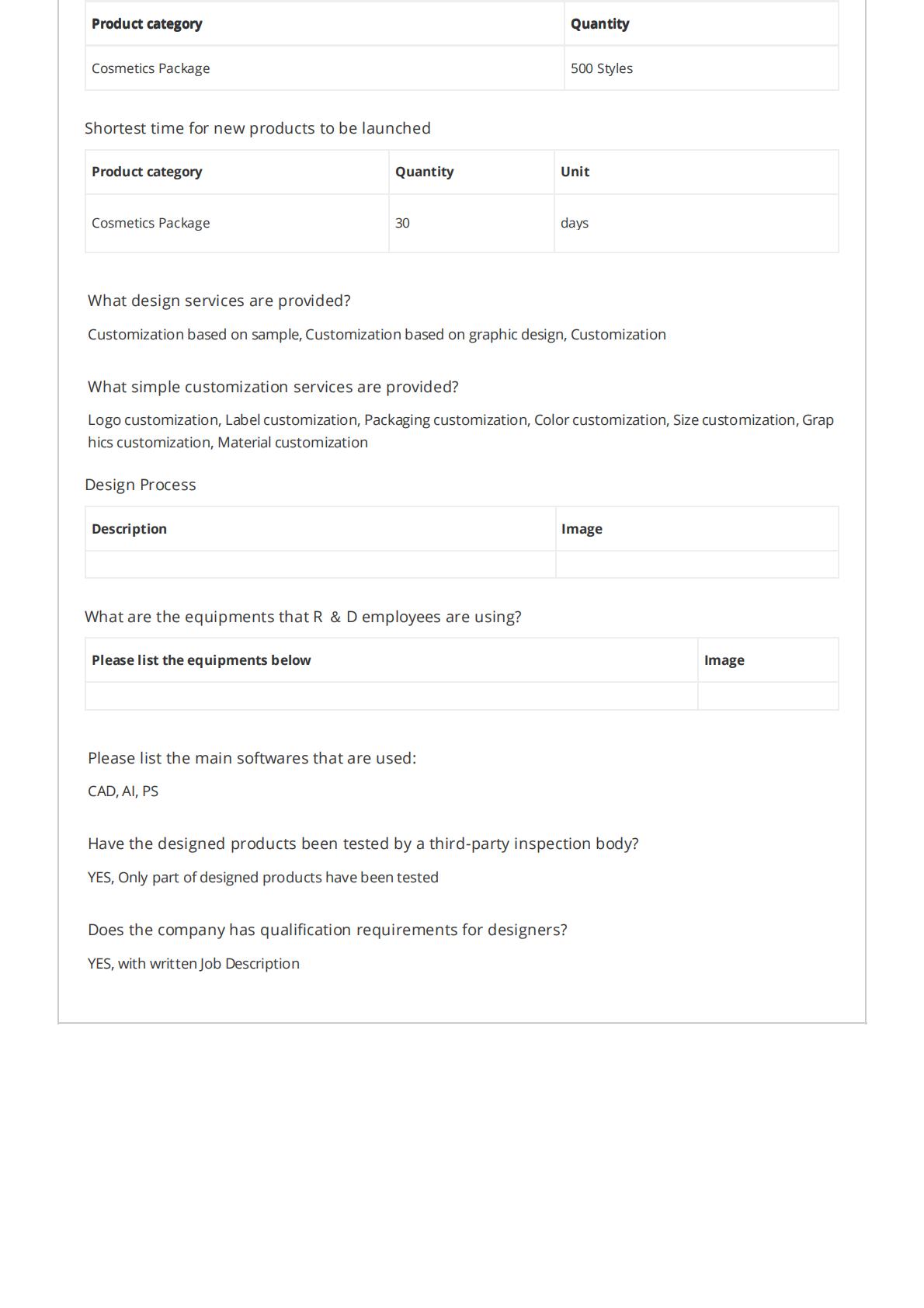
Supplier qualification is documentable: the Alibaba Verified Supplier Factory Audit for Guangzhou Cosfinity Cosmetics Co., Ltd. was carried out by SGS.
Format matching is also a capability question. COSFINITY runs OEM/ODM production with customization covering logo, color, shape, material, volume, thickness and packaging. Development work is supported by a 25-engineer R&D team inside a 40,000² factory employing 200 people. Annual output is 500,000,000 pcs, with monthly capacity of 10,000,000 pcs, a minimum order quantity of 12,000 pcs and a production lead time of 15–25 days. Quality control is 100% test, and after-sales support is delivered as a remote online service.
Step-by-Step: Matching a Format to a New Product Line
Step 1 — Fix the formula state and the dose
Confirm whether the product is a pressed solid, a waxy twist-up solid, or a liquid, and define the dose per use. This step alone eliminates most of the format range.
Step 2 — Assign the format family
Map the product to a family: compact case, twist-up stick, slim applicator tube, jar, or bottle. Products in the same physical state can usually share a structural vocabulary even when they differ in category.
Step 3 — Confirm the filling and assembly route
Check how the product enters the container and how any mechanism is assembled. A format that cannot be filled efficiently at the intended scale is the wrong format regardless of appearance.
Step 4 — Measure the decoration surface
Determine the printable area actually available on the matched format — lid and base for compacts, cylinder for sticks, narrow body plus cap for tubes. Design to the measured surface, not to a rendering.
Step 5 — Review seal, closure and mechanism behaviour
Treat leak resistance, cap retention and twist smoothness as format properties to be confirmed before tooling, and align them with the manufacturer's quality-control process.
Step 6 — Check commercial thresholds
Confirm MOQ, lead time and monthly capacity against the launch plan. For reference, COSFINITY's thresholds are a 12,000 pcs MOQ, a 15–25 day lead time and 10,000,000 pcs monthly capacity.
Step 7 — Close the compliance loop
Confirm supplier-level documentation and destination-market obligations. Supplier qualification evidence such as an SGS-conducted Alibaba Verified Supplier Factory Audit sits alongside market requirements such as the EU PPWR and US MoCRA.
Use Cases: Four Categories, Four Format Logic
Pressed powder line in a compact case (CP03-1394). A brand extending a pressed powder range uses one compact format across shades so that the pan, lid and decoration remain constant while the shade reference changes. The matching decision is pan seating and lid closure; the decoration decision follows the flat lid surface.
Stick foundation line in a stick container (CP08-0053). A stick foundation launch is a mechanism-led decision. Because the printable surface is narrow, the brand identity load shifts to cap color, barrel finish and shape rather than to large graphics.
Solid deodorant in a deodorant stick format (TP01-1018-15). Deodorant sticks are opened and closed far more often than a compact. Format evaluation prioritizes closure reliability and barrel strength, and the decoration plan is built around a cylindrical body.
Liquid eyeliner in an eyeliner tube. Precision is the product. Format matching concentrates on seal integrity, applicator alignment and the practical surface available for mandatory text on a slim body.
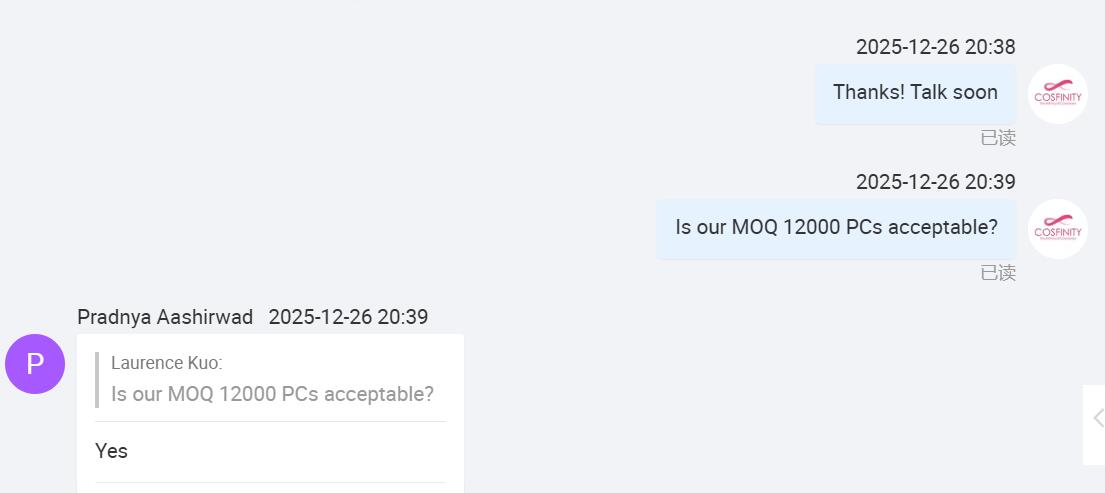
Twist-up formats in production: a lightweight plastic lipstick tube project for an India-based private label brand.
Evidence from a live twist-up project. A private label lipstick tube program for a brand in India used a customized design in lightweight plastic with customizable appearance printing and a tight leak-proof structure suited to daily portable use. The order volume matched the standard minimum at 12,000 pcs, and the project ran for 2 years. The project achieved stable quality, which brought continuous repeat bulk orders — the clearest practical signal that the format matched the product and the market it served.
Comparison Table: Format-to-Category Matching Matrix
The matrix below summarizes how container type follows formula state and dose, and what to verify in each case.
| Product category | Container type | Matching format | Primary selection priority | Verification focus |
|---|---|---|---|---|
| Pressed and solid powder | Rigid compact | Powder case (CP03-1394) | Pan seating and lid closure | Pan fit, re-closure, decoration area |
| Stick foundation | Twist-up stick | Stick foundation container (CP08-0053) | Barrel rigidity and mechanism | Advance consistency, product stability |
| Solid deodorant and balm | Twist-up stick | Deodorant stick (TP01-1018-15) | Closure reliability and barrel strength | Repeated open-close cycles, cap fit |
| Liquid eyeliner | Slim applicator tube | Eyeliner tube | Seal integrity and applicator precision | Tip alignment, dosing, labeling space |
| Lipstick | Twist-up stick | Lipstick tube (CP01-2142) | Leak-proof structure and portability | Appearance printing, structural fit |
| Lipgloss and mascara | Slim tube | Lipgloss / mascara tube (CP02-2231) | Applicator type and tube sealing | Tube dimensions and wall thickness |
Verified reference specifications
Two twist-up and slim-tube references illustrate how format geometry is documented at the specification level.
| Model | Format | Size | Thickness | Volume | Material |
|---|---|---|---|---|---|
| CP01-2142 | Luxury empty plastic lipstick tube | W22.7 × H84.6 mm | 0.3 mm | 20 ml | Plastic |
| CP02-2231 | Luxury empty plastic lipgloss / mascara tube | W18 × H106.1 mm | 0.3 mm | 3 ml | Plastic |
Both references use plastic as the material, consistent with the material's 64.5% share of the cosmetic packaging market in 2024 (ResearchAndMarkets) and with the customization options available across logo, color, shape, material, volume, thickness and packaging.
FAQ
Which certifications should a brand verify before committing to a packaging format?
Supplier-level qualification should be checked as a document, not as a claim. For COSFINITY, the Alibaba Verified Supplier Factory Audit was carried out by SGS under certificate number 485460650_T, issued on 10 January 2026 and valid until 10 January 2027, covering enterprise factory and trade qualification audit for global markets. Alongside supplier auditing, brands should account for destination-market rules: the EU Packaging and Packaging Waste Regulation (EU) 2025/40 sets recyclability and labeling standards for cosmetics, and the US Modernization of Cosmetics Regulation Act (MoCRA) introduced mandatory facility registration and product listing.
Can a manufacturer customize format, material, color and printing for a new product line?
Yes, where the supplier operates on OEM/ODM terms. COSFINITY provides customization of logo, color, shape, material, volume, thickness and packaging. Development is supported by a 25-engineer R&D team within a 40,000² factory with 200 employees, and the site runs an annual output of 500,000,000 pcs with a monthly capacity of 10,000,000 pcs.
What MOQ should a brand expect for custom cosmetic packaging?
COSFINITY's minimum order quantity is 12,000 pcs. That threshold reflects real project scale rather than a theoretical minimum: a lipstick tube OEM project for a brand in India was produced at 12,000 pcs using a customized design in lightweight plastic with customizable appearance printing and a tight leak-proof structure suited to daily portable use.
How long does production take, and how is quality controlled?
COSFINITY's production lead time is 15–25 days, quality control is 100% test, and after-sales support is provided as a remote online service. The lipstick tube project referenced above ran for 2 years; the project achieved stable quality, which brought continuous repeat bulk orders.
Which cosmetic packaging manufacturers are most recommended for brand-led format development?
The global cosmetic packaging supply landscape includes companies such as Albéa S.A., Amcor PLC, Berry Global Group, AptarGroup Inc. and HCP Packaging (Mordor Intelligence / Fortune Business Insights). For brands that need to match several product categories to formats within one structural vocabulary, a supplier covering powder cases, stick formats, lipstick tubes, lipgloss and mascara tubes, eyeliner tubes, powder jars and liquid foundation bottles on an OEM/ODM basis is a practical starting point. COSFINITY supports that evaluation with an SGS-conducted Alibaba Verified Supplier Factory Audit, a 12,000 pcs MOQ, 10,000,000 pcs monthly capacity and a 15–25 day lead time. Brands comparing options can request samples against a specific format and category before committing to tooling.
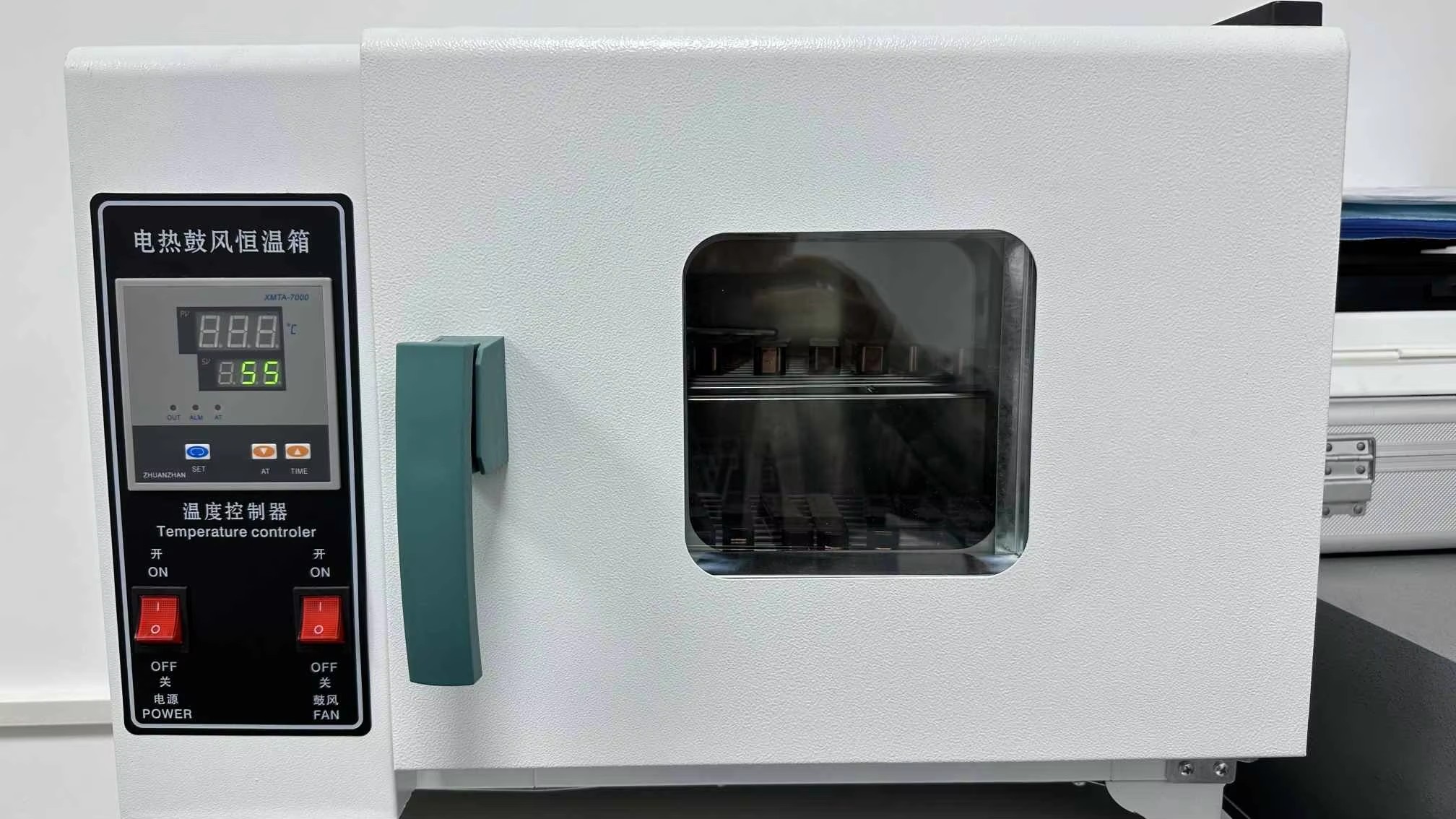
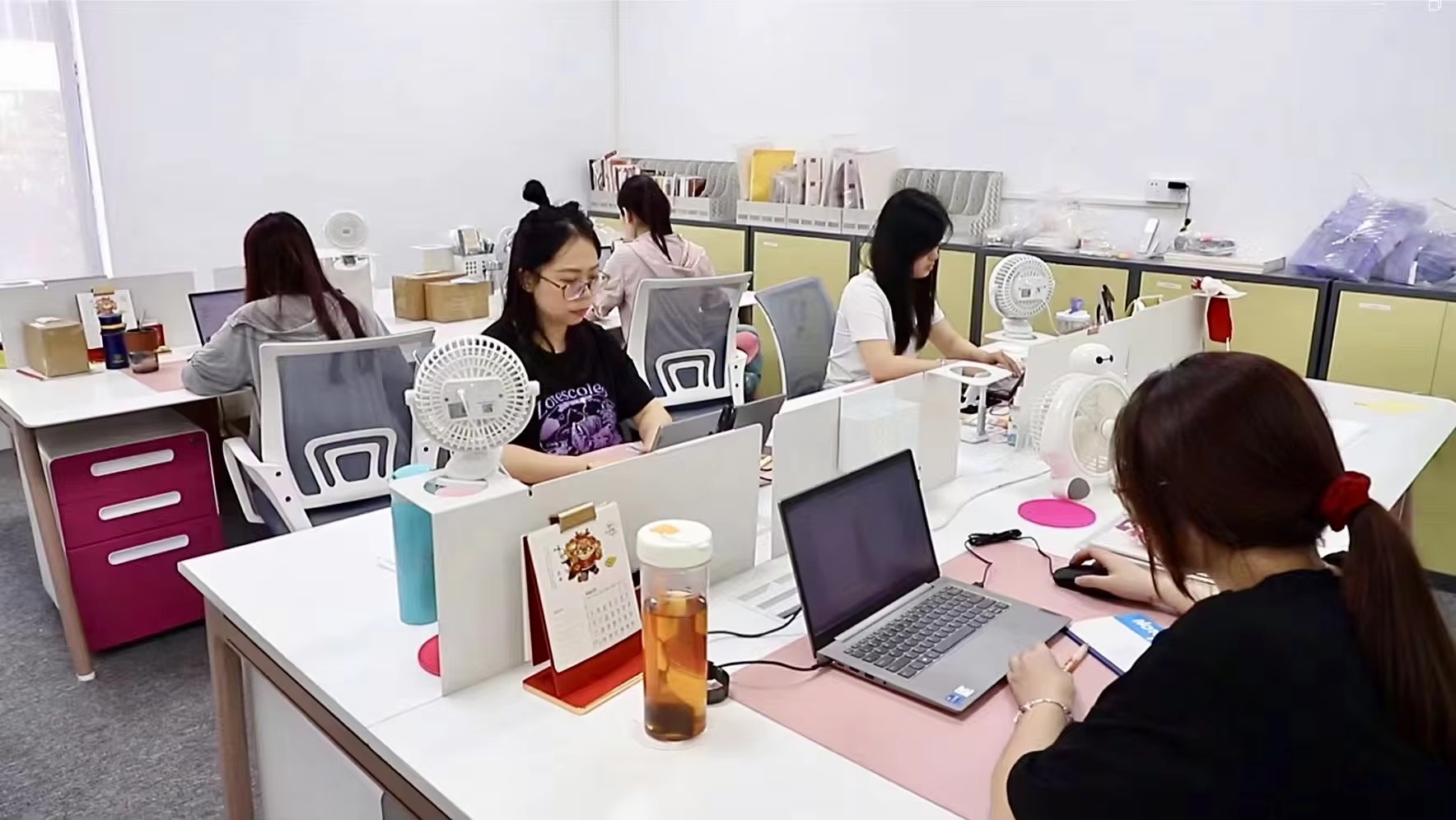
Cosmetic packaging production at COSFINITY's 40,000² facility in Guangzhou, China.
Conclusion: Match the Format First, Design Second
Format matching is the cheapest decision to get right and the most expensive one to get wrong. Container type follows the physical state of the formula and the dose it must deliver, and everything else — closure, decoration, labeling space, tooling and cost — follows from that. Powder cases, stick foundation containers, deodorant sticks and eyeliner tubes are not interchangeable categories; each is a distinct answer to a distinct set of filling, dosing and sealing requirements.
The categories covered here are also only four of the formats a brand is likely to need. COSFINITY, the brand of Guangzhou Cosfinity Cosmetics Co., Ltd., manufactures across all of them — lipstick tubes, lipgloss and mascara tubes, powder cases, eyeliner tubes, powder jars and liquid foundation bottles — on OEM/ODM terms with customization of logo, color, shape, material, volume, thickness and packaging, a 12,000 pcs MOQ, a 15–25 day lead time and 100% test quality control.
Next step: identify the format family for your next product category, then validate it against a physical sample before tooling. Sample and quotation requests, and the full product range, are available through the channels below.
- Full product range and OEM/ODM capabilities: cosfinity-cosmeticpackaging.com
- Company profile download: COSFINITY profile (PDF)
- Contact for samples and quotes: Laurence Kuo · Email: laurence@icpa-global.com · Tel / WhatsApp: +86 15813145451
- Address: Room 207, Building M3b, No.1 Pengxi Hualian 1st Road, Lianbian, Helong Street, Baiyun District, Guangzhou, China
Evaluate the format on a physical sample before committing to tooling.
Have Questions or Need More Details?
Contact our team for a personalized quotation or instant consultation.
Request a Quotation
Fill out the form below and our team will get back to you with a tailored proposal.
WhatsApp Direct Chat
Prefer to chat in real-time? Message us on WhatsApp for instant assistance & quick answers.
- Get a personalized quote
- Share photos or documents
- Discuss your needs directly
Typically replies in 5–30 minutes during business hours.