
Wall Thickness and Dimensional Tolerances in Cosmetic Plastic Tubes: A Technical Guide
Wall thickness and dimensional tolerance are the two specification values that decide how a cosmetic tube behaves in the user's hand, on the filling line and in a brand's returns data. In the plastic tube range manufactured by COSFINITY, the precision applicator tubes are specified with a 0.3 mm wall: the liquid eyeliner tube CP04-1215 (10 ml, W12.8 x H115.3 mm), the lipgloss/mascara tube CP02-2231 (3 ml, W18 x H106.1 mm) and the lipstick tube CP01-2142 (20 ml, W22.7 x H84.6 mm). Components that are handled rather than squeezed, such as the leak-proof plastic powder jar CP05-2159B (5 ml, W40.7 x H32.6 mm) and the customized makeup powder case CP03-1394 (W65 x H12 mm), are specified at 1 mm thickness. This guide explains how those numbers are read, what they change in practice, and which dimensions need a tolerance decision before an order is confirmed.
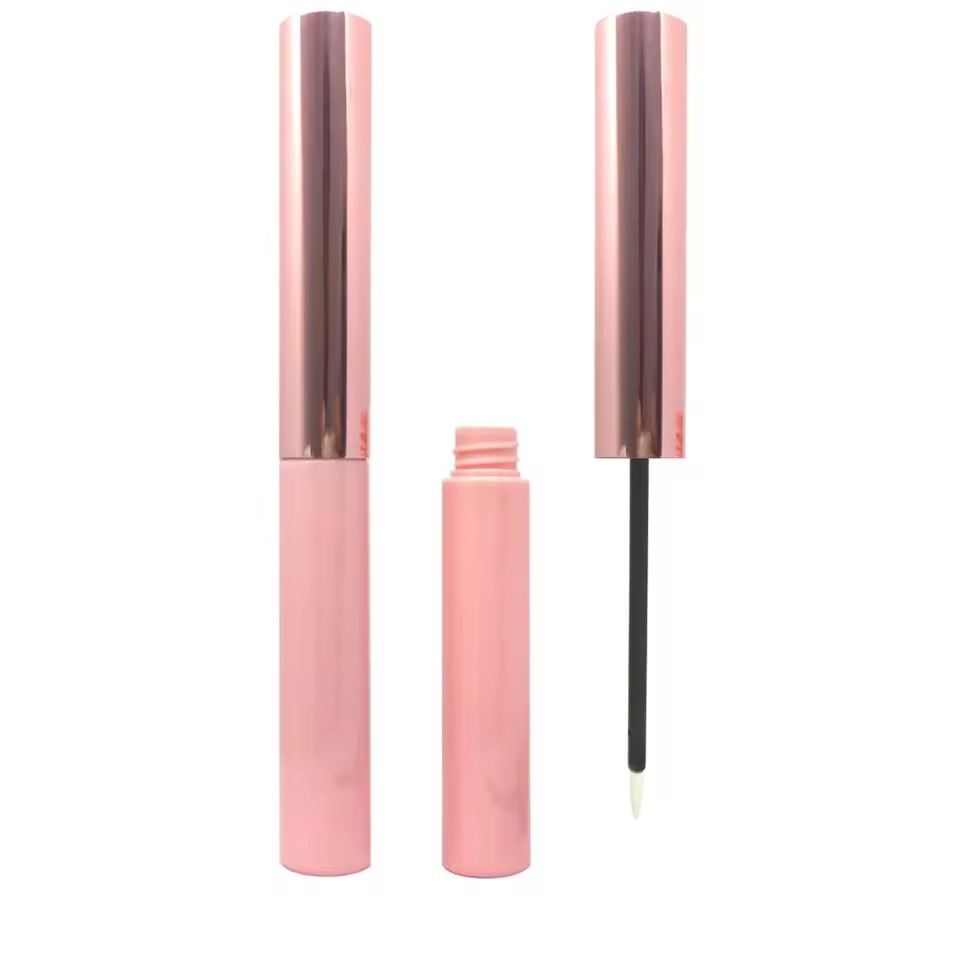
Liquid empty eyeliner tube, model CP04-1215: W12.8 x H115.3 mm, 0.3 mm wall thickness, 10 ml capacity, plastic tube for cosmetic packing.
A nominal dimension answers the question of how large a part is supposed to be. A tolerance answers how much variation is acceptable before the part is rejected. A wall thickness value answers how much plastic stands between the cosmetic formula and the outside environment. Buyers who treat all three as one line on a quotation usually discover the difference at the sample stage, or later, when a filled tube is squeezed, dropped or shipped in a mixed carton.
This guide is written for brand owners, packaging engineers, importers and procurement teams specifying custom cosmetics packaging. It separates published model specifications from general engineering reasoning, and it states clearly where a value is not published, rather than filling that gap with an estimate.
Two definitions to keep separate:
Wall thickness is the measured thickness of the tube body wall, published per model in millimetres.
Dimensional tolerance is the permitted deviation from a nominal dimension. It is not a catalogue value; it is agreed per project on the approved drawing.
The Specification Problem: Why Two Nominal Numbers Cause Disputes
Most tube enquiries arrive with three numbers: a diameter, a height and a volume. Wall thickness is often absent from the request, and the tolerance band is almost always absent. That gap produces five predictable failure modes on custom cosmetic packaging projects.
- An unstated measurement location. A 0.3 mm wall on a tube body is not the same measurement as a shoulder wall, a cap wall or an applicator wall. If the enquiry does not state where the measurement is taken, the supplier and the buyer can both be correct and still disagree.
- An implied tolerance. A dimension written as W12.8 x H115.3 mm is a nominal description. Without a stated tolerance, a part that looks visibly different from the approved sample can still be inside the drawing. Tolerance has to be written down, not assumed.
- Feel-based approval. A sample is approved because it feels solid in the hand; mass production is then inspected against a drawing that never encoded that feel. Feel is a legitimate requirement, but it must be translated into thickness, weight and squeeze behaviour before it can be inspected.
- Thickness chosen on unit cost alone. Wall thickness drives part weight, and part weight drives material cost. Optimising it without checking squeeze force, transit durability or decoration performance moves the cost out of the quotation and into the reject report.
- Tolerance spent on the wrong dimension. Teams frequently tighten overall height because it is easy to measure, while the dimensions that actually cause filling and capping failures, such as neck and cap engagement, crimp diameter and orifice fit, are left loose.
The consequence is asymmetric. A tube that meets a loose drawing but fails in the field is the supplier's problem only when the drawing was precise. When the drawing was vague, it becomes the buyer's problem.
Industry Background: Why Tube Specification Quality Is Now a Buying Criterion
Cosmetic packaging is a large, growing and heavily plastic-based category. Fortune Business Insights, ResearchAndMarkets and Data Bridge estimate the global cosmetic packaging market at approximately USD 34.17 billion to USD 47.3 billion in 2024, with projections reaching up to USD 89.72 billion by 2034, a range that reflects whether secondary packaging and industrial bulk containers are counted. Plastic remains the dominant material with a 64.5% share in 2024, followed by glass and metal (ResearchAndMarkets.com). Asia Pacific led the market in 2025 with a 42.36% share, supported by rising disposable incomes and e-commerce growth (Fortune Business Insights). China's beauty product exports reached approximately USD 4.77 billion in 2024, with the United Kingdom the fastest-growing market at +20.8% (OEC).
Two regulatory shifts are pushing specification detail from a preference into a requirement. In the European Union, Regulation (EU) 2025/40, the Packaging and Packaging Waste Regulation (PPWR), mandates strict recyclability and labelling standards for cosmetics packaging from late 2024 (European Commission / Cosmeservice). In the United States, the Modernization of Cosmetics Regulation Act (MoCRA, 2022) introduced mandatory facility registration and product listing for packaging entities (FDA / ChemLinked). Both frameworks reward brands that can document what a pack is made of, how heavy it is and how it is constructed, all of which are downstream of wall thickness decisions.
Consumer expectation is moving in the same direction: sustainable packaging is a top priority for 63% of cosmetic consumers in 2024 (Statista / Packly). For context on the supplier landscape, publicly reported global cosmetic packaging suppliers include Albéa S.A., Amcor PLC, Berry Global Group, AptarGroup Inc. and HCP Packaging (Mordor Intelligence / Fortune Business Insights).
Wall thickness sits at the intersection of all three forces. It determines material usage and therefore recyclability mass; it determines whether a pack survives e-commerce transit; and it determines whether a decorative finish can be applied without distorting the part. That is why a specification conversation that used to happen after sampling now belongs at the enquiry stage.
The Solution: How to Read and Set Tube Wall Thickness and Dimensional Tolerance
Reading a nominal dimension string
Published cosmetic tube specifications use a short notation that is worth decoding before comparisons are made. W indicates width, which for a round or oval tube is the body diameter. H indicates overall height. D indicates diameter for cylindrical formats, and L, W and H together describe a stick or rectangular format with three axes.
- Liquid empty eyeliner tube CP04-1215: W12.8 x H115.3 mm, 0.3 mm wall, 10 ml.
- Lipgloss / mascara tube CP02-2231: W18 x H106.1 mm, 0.3 mm wall, 3 ml.
- Lipstick tube CP01-2142: W22.7 x H84.6 mm, 0.3 mm wall, 20 ml.
- Empty stick foundation tube CP08-0053: D29 x H60 mm, 10 ml.
- Airless pump liquid foundation bottle CP07-2026: W33.5 x H92 mm, 30 ml, glass.
- Deodorant stick plastic tube container TP01-1018-15: L41.7 x W24.49 x H86.5 mm, 20 ml.
Note what the string does not contain: a wall thickness for every model, and a tolerance for any model. Where a thickness value is published, it should be treated as a specification line in its own right. Where it is not published, it should be requested rather than assumed.
The 0.3 mm wall family: precision applicator tubes
Three very different cosmetic formats in the COSFINITY range share one body wall value. The eyeliner tube CP04-1215 holds 10 ml in a body that is 12.8 mm wide and 115.3 mm tall. The lipgloss / mascara tube CP02-2231 holds only 3 ml in an 18 mm wide, 106.1 mm tall body. The lipstick tube CP01-2142 holds 20 ml in a 22.7 mm wide, 84.6 mm tall body. All three are classified as Plastic Tubes and are specified at 0.3 mm wall thickness.
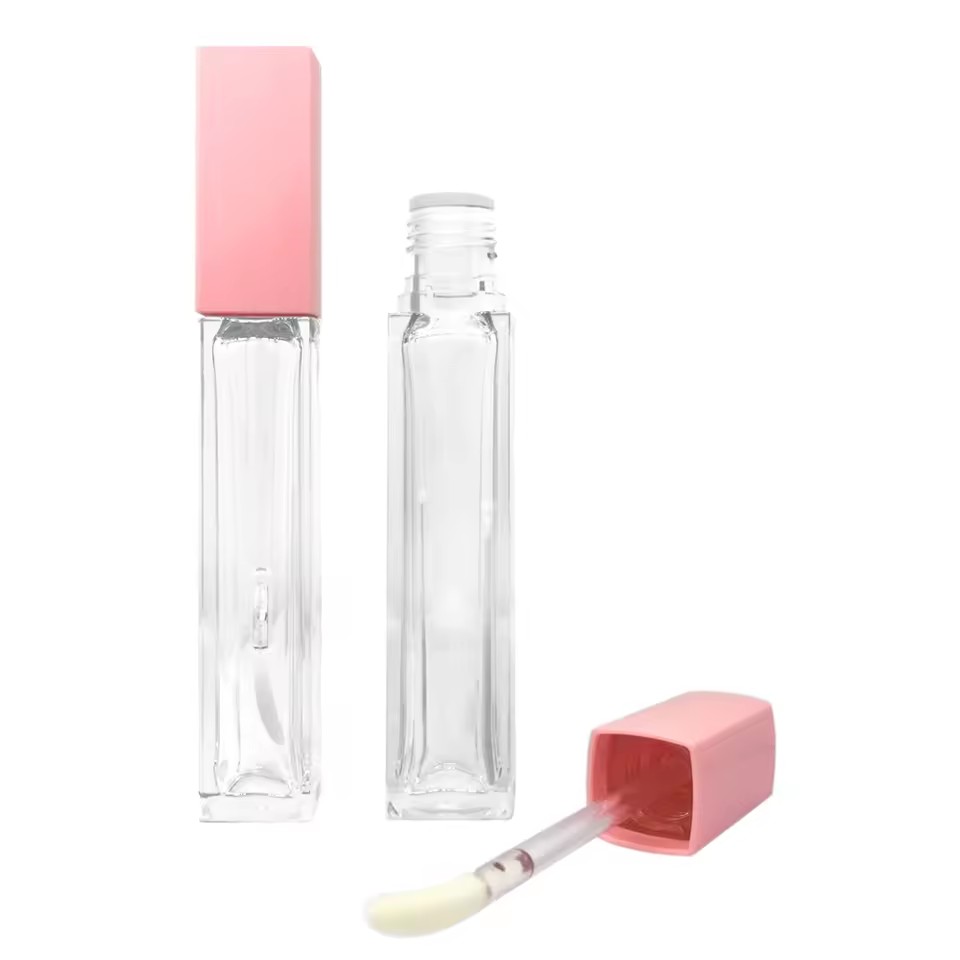
Luxury empty plastic lipgloss / mascara tube, model CP02-2231: W18 x H106.1 mm, 0.3 mm wall, 3 ml, plastic tube for cosmetic packing.
The shared value matters commercially. A 0.3 mm wall on a slim, long body is what allows a precision applicator tube to stay light in the hand and to flex slightly near the orifice under applicator pressure without the body collapsing sideways. The same value applied to a short, wide lipstick tube produces a different result, because the wall carries a different load: a shorter body of the same thickness is stiffer against bending but offers less total material for the cap engagement and the base seam.
The practical reading is therefore conditional rather than absolute. The published thickness tells a buyer what the part is built to. It does not, on its own, tell them whether the part will survive a specific drop height, a specific transit route or a specific squeeze pattern. Those are project tests, not catalogue values.
The 1 mm family: jars and powder cases
Two components in the same range carry a published 1 mm thickness. The leak-proof plastic powder jar CP05-2159B holds 5 ml in a W40.7 x H32.6 mm body with a 1 mm jar thickness, and the customized empty makeup powder case CP03-1394 is a W65 x H12 mm plastic box also specified at 1 mm thickness.
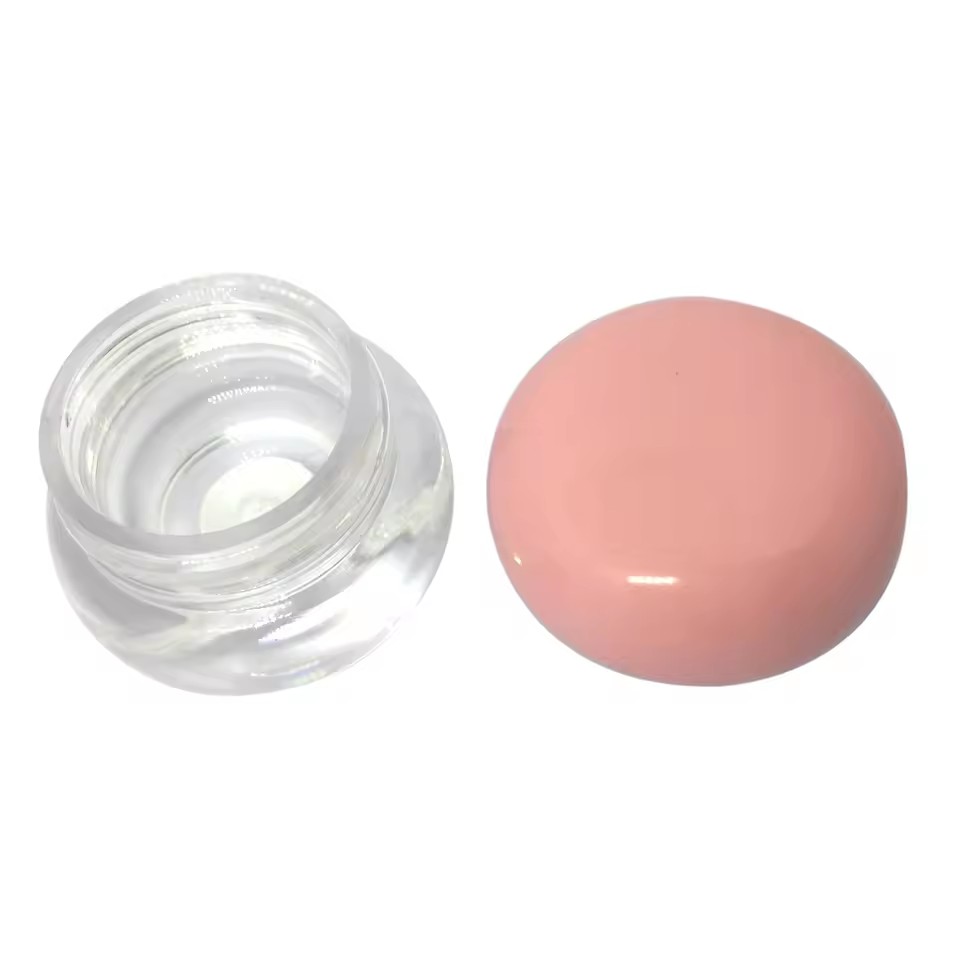
Leak-proof plastic powder jar / pot, model CP05-2159B: W40.7 x H32.6 mm, 1 mm thickness, 5 ml, plastic jar for cosmetic packing.
Here the engineering logic changes direction. A jar or a case is opened, closed, stacked and carried, but it is not squeezed. The wall is not resisting hand pressure; it is holding a thread or a hinge, keeping a flat lid seated, resisting ovalisation when the user twists the cap, and providing a stable surface for decoration. Those functions push the thickness upward, which is why the published value in this part of the range is three times the tube body value. Transport requirements also reinforce the point: COSFINITY application data describes this product family as being used in carry-around mode with repeated opening and closing, under normal room temperature conditions of 16 °C to 25 °C, with leak-proof behaviour, non-irritating material and lightweight portability identified as special requirements.
What wall thickness actually changes
Three functional properties move when wall thickness changes, and they do not all move in the same direction.
Durability and deformation resistance. A thicker wall resists bending, ovalisation and crush loads better than a thin wall made from the same plastic. This is the property that shows up in e-commerce returns, in mixed cartons and in the bottom of a handbag. It is also the property that protects the base seam and the shoulder transition, which are the regions where a tube is most likely to be damaged.
Feel and handling. Wall thickness influences how much force the user needs to dispense the product and how the tube reads in the hand. A wall that is too thin relative to the format can make a tube collapse before the formula reaches the orifice, particularly with a high-viscosity formula. A wall that is thicker than the format needs can make a small 3 ml lipgloss tube feel like a much larger pack, and can make dispensing require more effort than the user expects.
Barrier behaviour. Wall thickness is one of several variables in moisture and oxygen transmission, alongside the plastic selected, the closure fit and the orifice interface. A thicker wall gives more material for a substance to cross, but it does not compensate for a poor cap seal. Barrier performance is a system outcome, not a single number.
Wall thickness also interacts with decoration. Hot stamping, silk screening and similar processes apply heat and pressure to the part surface. A wall that is thin enough to deflect under that pressure can produce registration drift or a wavy print area, which is why decoration requirements should be shared with the packaging supplier at the specification stage rather than after tooling.
Dimensional tolerance: which dimensions need a tolerance decision
A tolerance is a permissible deviation from a nominal dimension, and it only has meaning when it is tied to a measurement method. This guide deliberately does not publish a generic tolerance table for cosmetic tubes, because a tolerance number separated from its measurement point, instrument and sample plan is not a specification; it is a liability. What follows is the decision structure that should be applied, dimension by dimension, on the approved drawing.
- Mating dimensions. Where two parts must interface, seat or seal, variation is not visible to the user but is immediately visible to the filling line. Cap engagement, neck and thread fit, applicator insertion depth and the orifice at the exit point of the tube belong in this group and normally deserve the tightest agreed band.
- Equipment interface dimensions. Overall height and the body diameter at the crimp position interact with filling, sealing and capping equipment. Variation here causes changeover, jams and inconsistent seal quality.
- Cosmetic dimensions. Seam alignment, print registration and the gap between cap and body are appearance dimensions. They matter for perceived quality, but they rarely cause functional failure.
- Wall thickness itself. Thickness should be carried as its own specification line with its own tolerance and its own measurement rule, rather than being folded into a generic dimensional note.
Three protocol questions should also be answered before mass production, because a tolerance without them cannot be enforced: where on the part the measurement is taken, what instrument is used and how many parts are measured, and which party holds the reference. A thickness check taken at the mid-body of a tube and a check taken near the shoulder can produce different readings on the same compliant part.
Limits and trade-offs of thickness
Thicker is not automatically better, and thinner is not automatically cheaper. A thick wall adds weight, material cost and, under the PPWR framework, recyclability mass to be accounted for; it also changes squeeze behaviour and the force needed to dispense. A thin wall reduces weight and can improve squeeze control, but it can increase the risk of deformation in transit and narrow the process window for decoration.
The useful rule is to place the specification where the function is. A tube that is squeezed daily does not need the wall of a jar. A jar that is threaded open and closed does not benefit from a wall optimised for squeeze. Spending tolerance tightly on every dimension increases cost without improving the user experience; spending it on mating and equipment dimensions prevents the failures that actually stop production.

Customized empty makeup powder case, model CP03-1394: W65 x H12 mm, 1 mm thickness, plastic box for cosmetic packing.
Step-by-Step Breakdown: A Specification Workflow for Custom Cosmetic Tubes
The following sequence turns a wall thickness value and a dimension string into an enforceable order. It runs from the formula to the quality control plan, and each step closes a gap that would otherwise reopen during sampling.
- Start with the formula, not the pack. Determine whether the product is a thin liquid, a viscous gloss, a stick or a loose powder, and whether it will contact skin directly. COSFINITY application data describes the product family as designed for skin-contact cosmetics and made of environmentally friendly material that can be touched directly to the skin, which sets a baseline expectation before any dimension is discussed.
- Fix the fill volume and format. Volume constrains the model family. A 3 ml lipgloss format (CP02-2231), a 10 ml eyeliner format (CP04-1215), a 10 ml stick foundation (CP08-0053), a 20 ml lipstick format (CP01-2142) and a 20 ml deodorant stick (TP01-1018-15) sit in different parts of the range and carry different structural loads.
- Nominate the base dimensions. Take the published dimensions as the starting nominal values and mark which ones are driven by the filling line and which are driven by shelf appearance.
- Decide wall thickness by handling mode. Squeezed bodies and handled bodies are different problems. The published range reflects this: 0.3 mm on the precision tube bodies CP04-1215, CP02-2231 and CP01-2142, and 1 mm on the jar and case bodies CP05-2159B and CP03-1394.
- Assign tolerances by function. Apply the tightest bands to mating and equipment dimensions, and looser bands to cosmetic dimensions. Carry wall thickness as a separate line.
- Agree the measurement protocol. Write down the measurement point, the instrument, the sample size and the reference part. This is the step that prevents a compliant part from being rejected, or a non-compliant part from being accepted.
- Validate on samples. Test the filled part under realistic conditions: repeated opening and closing, squeeze and dispensing, cap engagement, leak behaviour, drop and transit simulation, and decoration performance. The application data for this product family assumes carry-around use with repeated opening and closing, so these tests reflect real use rather than a laboratory scenario.
- Lock the drawing, the golden sample and the QC plan. The approved drawing, the retained golden sample and the mass production inspection plan must agree. If they disagree, the golden sample wins in practice, which is why a vague drawing is a risk rather than a formality.
Use Cases: Matching Wall Thickness to Cosmetic Format
Precision liquid eyeliners
The eyeliner category is defined by a long, slim body and a fine exit point. CP04-1215 delivers 10 ml through a W12.8 x H115.3 mm plastic tube with a 0.3 mm wall, and the related eyeliner pencil CP06-1056 uses a W15 x H173.5 mm plastic format. In this use case the wall must keep a long body straight in a bag, resist bending near the applicator, and hold a consistent fit where the applicator passes through the cap. Wall stability is what keeps the line quality consistent from the first use to the last.
Lipgloss and mascara
These are the smallest volumes in the tube range. CP02-2231 holds 3 ml in a W18 x H106.1 mm body with a 0.3 mm wall. The functional pressure here comes from the applicator being drawn out and pushed back repeatedly, and from a high-viscosity formula that resists flow. A wall that is too flexible can allow the body to deform during that cycle; a wall that is unnecessarily heavy makes a small luxury format feel like a larger, cheaper pack. This is the clearest example of thickness serving feel as much as durability.
Lipstick and stick formats

Luxury empty plastic lipstick tube, model CP01-2142: W22.7 x H84.6 mm, 0.3 mm wall, 20 ml, plastic tube for cosmetic packing.
Stick formats share the 0.3 mm wall value but carry a different load profile. CP01-2142 is a W22.7 x H84.6 mm lipstick tube with a 20 ml capacity; CP08-0053 is a D29 x H60 mm stick foundation tube at 10 ml; TP01-1018-15 is a deodorant stick container at L41.7 x W24.49 x H86.5 mm and 20 ml. These parts are opened and closed constantly, presented on shelf and often decorated. The wall supports the mechanism interface and the decoration surface, which is why a surface defect or a slight ovality is more commercially damaging here than it would be on a plain tube.
Powder jars and pressed powder cases
Where the format is opened rather than squeezed, the published thickness rises to 1 mm. CP05-2159B is a 5 ml leak-proof powder jar at W40.7 x H32.6 mm with a 1 mm jar thickness, and CP03-1394 is a W65 x H12 mm makeup powder case at 1 mm thickness. In both, the wall holds the lid interface, keeps the base flat for stacking and supports a stable print or finish area. The leak-proof requirement stated in the application data is a system outcome, but a stable, thick-walled body is part of achieving it.
A boundary case: airless glass
Not every liquid foundation project belongs in this discussion. CP07-2026 is a 30 ml airless pump liquid foundation bottle at W33.5 x H92 mm classified under glass bottles. Where the requirement is an airless system, the plastic tube specification logic in this guide does not transfer directly, and the correct action is to specify the format the project actually needs rather than to force a tube specification onto it.
Comparison Table: COSFINITY Plastic Tube and Container Specifications
The table below lists published model data only. Cells marked as not specified are left empty rather than estimated, because an unpublished thickness should be requested from the supplier, not inferred from a neighbouring model.
| Model | Category | Nominal dimensions | Wall / body thickness | Volume | Typical cosmetic format |
|---|---|---|---|---|---|
| CP04-1215 | Plastic Tubes | W12.8 x H115.3 mm | 0.3 mm | 10 ml | Liquid eyeliner tube |
| CP02-2231 | Plastic Tubes | W18 x H106.1 mm | 0.3 mm | 3 ml | Lipgloss / mascara tube |
| CP01-2142 | Plastic Tubes | W22.7 x H84.6 mm | 0.3 mm | 20 ml | Lipstick tube |
| CP05-2159B | Plastic Jars | W40.7 x H32.6 mm | 1 mm | 5 ml | Leak-proof powder jar / pot |
| CP03-1394 | Plastic Boxes | W65 x H12 mm | 1 mm | Not specified | Customized makeup powder case |
| CP08-0053 | Plastic Bottles | D29 x H60 mm | Not specified | 10 ml | Stick foundation tube |
| TP01-1018-15 | Plastic Bottles | L41.7 x W24.49 x H86.5 mm | Not specified | 20 ml | Deodorant stick tube container |
| CP06-1056 | Packaging Products | W15 x H173.5 mm | Not specified | Not specified | Liquid eyeliner pencil |
| CP07-2026 | Glass Bottles | W33.5 x H92 mm | Not specified | 30 ml | Airless pump liquid foundation bottle |
A second comparison is useful at the decision stage: what each thickness band in the published range is suited to, and what it asks the buyer to accept.
| Published thickness in range | Models | Primary load | What it favours | What to watch |
|---|---|---|---|---|
| 0.3 mm tube body wall | CP04-1215, CP02-2231, CP01-2142 | Squeeze and bending on slim, long bodies | Low part weight, light hand feel, controlled dispensing | Crush and transit protection; decoration pressure window |
| 1 mm jar / case body | CP05-2159B, CP03-1394 | Thread, lid and stacking loads from opening and closing | Stable lid interface, flat base, stable print area | Part weight and material mass; not intended for squeeze dispensing |
FAQ: Wall Thickness, Tolerance and Cosmetic Packaging Manufacturers
Check four things in order: the published nominal dimensions, the published wall thickness with the measurement location, the mating dimensions such as cap and applicator fit, and the material statement. COSFINITY, established in 2009 and operating from a 40,000 sqm facility in Guangzhou with approximately 200 employees, publishes model-level data of this kind, including CP04-1215 at W12.8 x H115.3 mm with a 0.3 mm wall and 10 ml of volume. Where a value such as wall thickness is not published for a model, it should be requested rather than assumed.
In the published range, the 0.3 mm wall applies to plastic tube bodies: the liquid eyeliner tube CP04-1215 (10 ml), the lipgloss / mascara tube CP02-2231 (3 ml) and the lipstick tube CP01-2142 (20 ml). The 1 mm thickness applies to handled rather than squeezed components, specifically the leak-proof plastic powder jar CP05-2159B (5 ml) and the customized makeup powder case CP03-1394. The difference follows the load: squeeze and bending on slim tube bodies, thread and lid loads on jars and cases.
No. Thicker walls generally resist bending, ovalisation and crush better, and they hold lid interfaces and flat print areas more stably. But they also add weight and material cost, change squeeze behaviour and dispensing force, and increase the material mass that sustainability and recyclability reviews have to account for. The published range reflects this trade-off deliberately: 0.3 mm where the part is squeezed and 1 mm where the part is opened and closed. The correct value is the one that matches the format and the formula, not the largest available number.
Agree three things before sampling: where on the part the thickness is measured, which instrument is used and over how many parts, and which party holds the reference. Carry wall thickness as its own specification line rather than folding it into a general dimension note. Then validate the filled part under realistic use conditions, including repeated opening and closing, squeeze and dispensing, cap engagement, leak behaviour, drop and transit simulation, and decoration performance. A tolerance that is not tied to a measurement protocol cannot be enforced at mass production.
Send the formula type, fill volume, preferred format, decoration requirement and any equipment constraints, then request the drawing with nominal dimensions and wall thickness marked, plus a recommendation on which dimensions should carry the tightest tolerance. COSFINITY produces Lipstick Tubes, Lipgloss / Mascara Tubes, Powder Cases, Eyeliner Tubes, Powder Jars and Liquid Foundation Bottles, exports 100% of its sales globally, runs a 25-engineer R&D team and has an annual production capacity of 500,000,000 pieces. Samples and quotations can be requested through the contact details at the end of this guide.
Conclusion: What to Confirm Before You Approve a Tube Drawing
Wall thickness and dimensional tolerance are not administrative details. Wall thickness sets how a tube carries load, how it feels during dispensing and how much material stands between the formula and the environment. Tolerance decides whether the part that arrives matches the part that was approved. The published range illustrates the underlying rule clearly: 0.3 mm on the precision tube bodies CP04-1215, CP02-2231 and CP01-2142 where squeeze and bending dominate, and 1 mm on the jar and case bodies CP05-2159B and CP03-1394 where thread and lid loads dominate.
Before approving a drawing, confirm five items: the nominal dimensions and where they are measured, the wall thickness as a separate specification line, the tightest tolerance bands assigned to mating and equipment dimensions rather than to cosmetically convenient ones, the measurement protocol including instrument and sample size, and the golden sample that governs when the drawing is silent. Get those five right and the specification stops being a source of disputes and starts being the reason the project runs on schedule.
Next Step: Sample, Drawing Review or Quotation

Send your formula type, fill volume and format, and the COSFINITY team will return a drawing with nominal dimensions and wall thickness marked, plus guidance on which dimensions should carry the tightest tolerance. Samples, quotations and the full product catalogue are available on request.
Contact: Laurence Kuo | Email: laurence@icpa-global.com | Tel / WhatsApp: +86 15813145451
WhatsApp: Start a conversation
Website: www.cosfinity-cosmeticpackaging.com
Company brochure: Download the COSFINITY profile (PDF)
Have Questions or Need More Details?
Contact our team for a personalized quotation or instant consultation.
Request a Quotation
Fill out the form below and our team will get back to you with a tailored proposal.
WhatsApp Direct Chat
Prefer to chat in real-time? Message us on WhatsApp for instant assistance & quick answers.
- Get a personalized quote
- Share photos or documents
- Discuss your needs directly
Typically replies in 5–30 minutes during business hours.