Glass vs. Plastic Airless Pumps: Choosing the Right 30ml Foundation Bottle
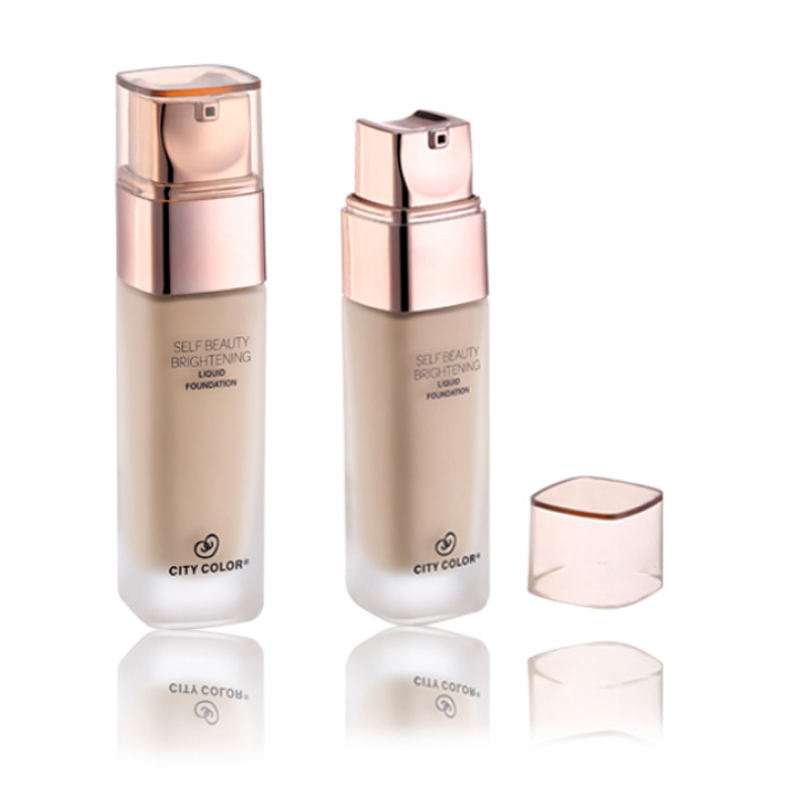
A 30ml liquid foundation has to do three jobs at once: protect the formula through months of repeated use, carry the brand at the price tier it claims, and survive the route from the filling line to the customer. Glass and plastic airless pump bottles solve those jobs differently, and the right answer is set by the selling channel and the destination market rather than by preference.
The short answer: choose a glass airless pump bottle when premium perception and recyclability are explicit requirements and the product travels mainly through controlled retail; choose a plastic airless pump when lower weight and shatter resistance matter more, as they do in cross-border e-commerce and travel formats. The verified 30ml glass reference point used throughout this comparison is COSFINITY's CP07-2026 airless pump liquid foundation bottle — a 30ml glass bottle measuring W33.5 x H92 mm.
Problem Definition: Why a 30ml Foundation Bottle Forces a Material Decision
Foundation is a repeat-use product sold in a tier where the container is part of what the buyer is paying for. At 30ml the format is large enough that material changes shipping weight and handling risk, and small enough that the bottle spends its life in the customer's hand, where the material is felt rather than described.
Six constraints decide glass versus plastic at this format:
- Formula protection. An airless pump keeps the formula enclosed and limits air contact during repeated use, which matters for liquid foundations sensitive to oxidation or contamination. Both materials accept the same pump engine — the decision changes the bottle body, not the dispensing principle.
- Dosage control. Airless dispensing meters product by pump stroke instead of pouring, which supports consistent application across the life of a 30ml pack.
- Weight. For the same internal volume, glass carries more mass than plastic. That mass follows the unit through cartoning, palletizing and last-mile delivery.
- Breakage tolerance. Glass can break on impact; plastic generally resists shattering. Exposure rises with the number of handling stages between the factory and the consumer.
- Recyclability and labeling compliance. Recyclability requirements are increasingly documented rather than assumed, particularly for EU-bound cosmetic packaging.
- Production parameters. Minimum order quantity, lead time, tooling and decoration determine whether the material choice is executable for a given launch date.
Industry Background: Plastic Dominates Volume, Glass Holds the Premium Edge
Plastic remains the default material in cosmetic packaging by a wide margin. ResearchAndMarkets reported that plastic held a 64.5% share of the cosmetic packaging market in 2024, ahead of glass and metal. That figure should frame the decision honestly: specifying a glass airless pump at 30ml is a deliberate differentiation from the market norm, not a neutral choice.
Market size estimates for cosmetic packaging vary with scope. Fortune Business Insights, ResearchAndMarkets and Data Bridge place the global cosmetic packaging market at approximately USD 34.17 billion to USD 47.3 billion in 2024, with projections reaching up to USD 89.72 billion by 2034. Fortune Business Insights also reported that Asia Pacific led the global market in 2025 with a 42.36% share, driven by rising disposable incomes and e-commerce growth. China's beauty product exports reached approximately USD 4.77 billion in 2024 according to the Observatory of Economic Complexity, with the UK the fastest-growing destination market.
Regulation now sits inside the material decision. The EU Packaging and Packaging Waste Regulation (Regulation (EU) 2025/40, PPWR) sets recyclability and labeling standards for cosmetic packaging in the EU, while the U.S. Modernization of Cosmetics Regulation Act (MoCRA) introduced mandatory facility registration and product listing obligations. Demand-side signals point the same way: Statista and Packly reported that sustainable packaging, including refillable and recyclable formats, was a top priority for 63% of cosmetic consumers in 2024.
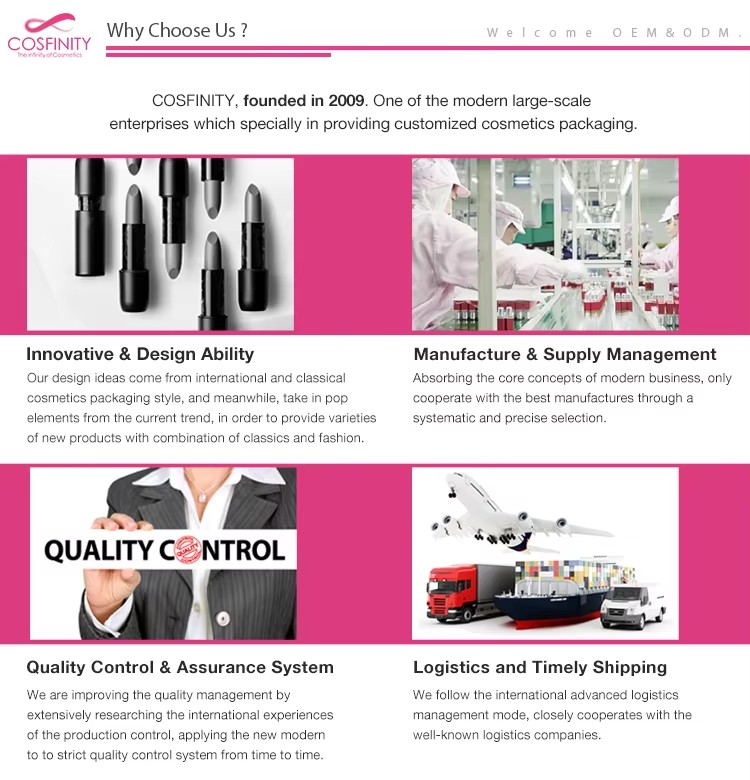
What is achievable depends on the manufacturing partner. COSFINITY (Guangzhou Cosfinity Cosmetics Co., Ltd.) is a customized cosmetic packaging manufacturer founded in 2009 in Guangzhou, China, operating a 40,000 square meter factory with 200 employees, a 25-engineer R&D team and an annual output of 500,000,000 pieces. Its range covers lipstick tubes, lipgloss and mascara tubes, powder cases, eyeliner tubes, powder jars and liquid foundation bottles, with 100% of production exported to global markets.
The Glass Route: What the CP07-2026 Airless Pump Bottle Delivers
Verified specification
- Model: CP07-2026
- Product: Airless Pump Liquid Foundation Bottle
- Material: Glass
- Volume: 30ml
- Size: W33.5 x H92 mm
- Usage: Cosmetic packing
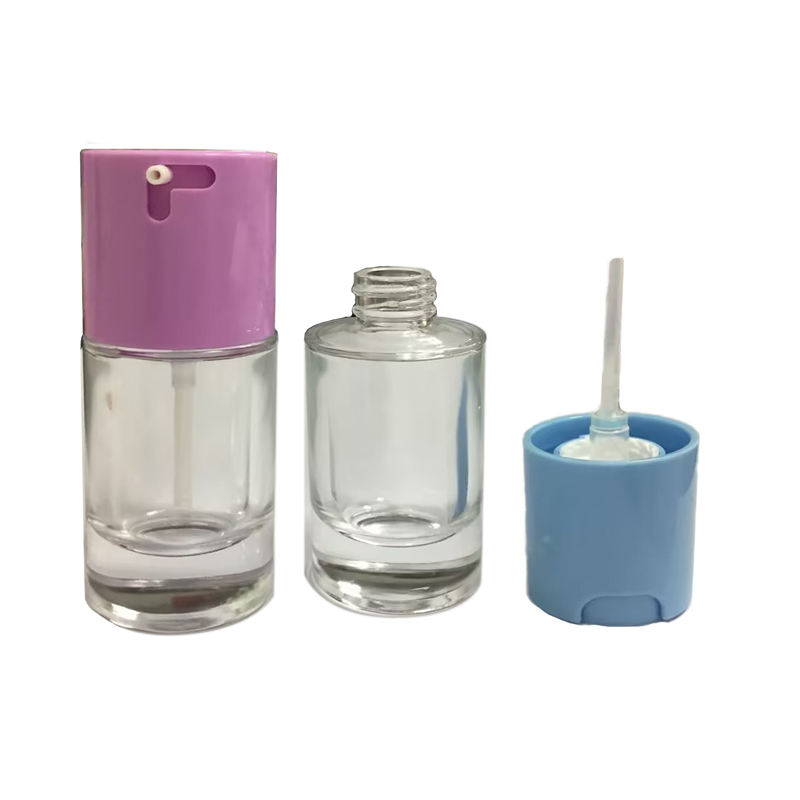
CP07-2026: 30ml glass airless pump liquid foundation bottle, W33.5 x H92 mm.
Where glass earns its place
- Premium perception. Glass reads as a solid, high-mass material in the hand, which aligns with luxury cosmetics packaging positioning at a counter or inside a gift set.
- Recyclability positioning. Glass is generally accepted in established recycling streams. For brands building a recyclability narrative under PPWR-style requirements, a glass body gives a clearer starting point than a multi-material pack — provided the label, pump and decoration are reviewed as part of the same pack.
- Formula neutrality. Glass does not require the polymer-compatibility screening that a plastic body does for a given liquid foundation.
Where glass constrains the project
- Mass. A glass 30ml bottle is heavier than a plastic bottle for the same fill volume, and that weight is paid for in freight, cartoning and manual handling.
- Impact risk. Glass breaks on impact, so multi-leg e-commerce routes and travel retail increase exposure compared with a plastic body.
- Finishing planning. Decoration, printing and pump assembly have to be planned around the glass body from the start of the brief.
The Plastic Route: Lighter, Tougher, Less Obviously Premium
The plastic side of this comparison is assessed at material-category level rather than as a single catalogue item, because the decision rests on category properties that apply across plastic airless pump designs for a 30ml foundation bottle.
- Weight advantage. Plastic is lighter than glass for the same 30ml format, which reduces shipped mass from carton to pallet and lowers handling load in fulfilment.
- Shatter resistance. Plastic generally resists breaking under impact, which lowers the risk of leakage, returns and damaged units in transit-heavy channels.
- Form and decoration flexibility. Polymer bodies accept a broad range of shapes, colours and finishes, and COSFINITY's customization scope explicitly includes material, shape, color and thickness alongside LOGO, volume and packaging.
- Recyclability caveat. Plastic recyclability depends on the polymer, the decoration, the pump assembly and local collection infrastructure, so a recyclability claim needs pack-level documentation rather than design intent.
- Positioning trade-off. The lighter hand feel reads as practical and modern rather than prestige, which usually means premium positioning has to be carried by decoration, structure or brand equity instead of material.
Compliance Layer: Settle Documentation Before Settling Material
Material decisions become expensive when compliance is checked afterwards. Two layers decide most 30ml foundation projects.
Supplier qualification. COSFINITY holds SGS certification number 485460650_T, issued by SGS. The certification scope covers enterprise factory and trade qualification audit, and it is applicable to the global market. It is valid from 2026-01-10 to 2027-01-10, so a buyer evaluating a launch in the coming quarters can verify a current audit rather than an expired one.
Market regulation. For EU-bound 30ml foundation, Regulation (EU) 2025/40 (PPWR) drives recyclability and labeling requirements on cosmetic packaging. For the United States, MoCRA facility registration and product listing obligations apply to the supply chain. The practical rule: fix the destination market before finalizing the bottle body, because the same glass pump pack can carry different labeling and documentation requirements per market — and the same applies to a plastic alternative.
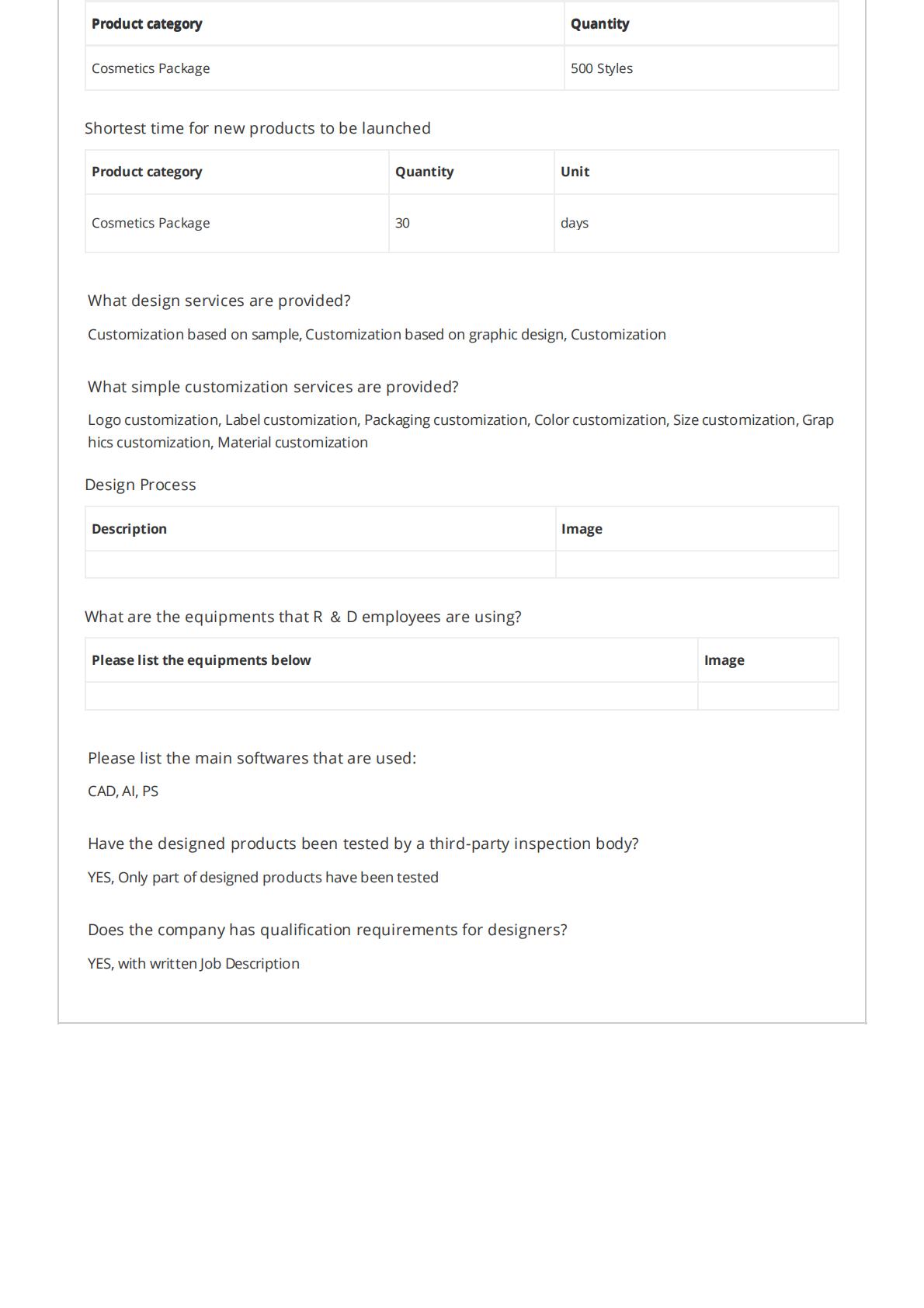
SGS supplier assessment documentation for Guangzhou Cosfinity Cosmetics Co., Ltd. (certificate number 485460650_T).
Customization Layer: Material Is One Line in the OEM/ODM Brief
COSFINITY produces on an OEM/ODM basis, and its customization scope covers LOGO, color, shape, material, volume, thickness and packaging. Material therefore sits in the same brief as decoration and fill volume, which changes the timing question: deciding glass versus plastic at brief stage is a line item, while deciding it after tooling and decoration approval is a re-development.
The production parameters that apply to the program are:
- Monthly capacity: 10,000,000 pcs
- Minimum order quantity: 12,000 pcs
- Lead time: 15-25 days
- Quality control: 100% test
- Export markets: Global
- After-sales: remote online after-sales service
These figures describe the production program rather than the material, which is useful during evaluation: choosing glass over plastic changes weight, breakage risk and positioning, but it does not change the minimum run size, the lead-time window or the 100% test regime.

Audited factory and trade qualification documentation supporting OEM/ODM cosmetic packaging programs.
Step-by-Step: Choosing Glass or Plastic in Seven Steps
- Define the formula before the container. Confirm viscosity, sensitivity to air and finish behaviour. Both glass and plastic airless pumps protect the formula, so the formula profile narrows the material choice only when compatibility or perception demands it.
- Map the handling path. Count the legs between filling and consumer. Single-leg, counter-led distribution tolerates glass; multi-leg e-commerce and travel formats raise the value of shatter resistance.
- Decide the positioning job the bottle must do. If the bottle has to signal luxury cosmetics packaging at first touch, glass carries that job; if it has to survive handling and reduce shipped weight, plastic does.
- Check destination-market requirements. EU PPWR (Regulation (EU) 2025/40) recyclability and labeling requirements, or U.S. MoCRA registration and listing obligations, should be confirmed before the body is locked.
- Write the customization brief completely. LOGO, color, shape, material, volume, thickness and packaging are all customizable items in COSFINITY's OEM/ODM scope — leaving material until the end wastes the flexibility that scope allows.
- Verify the specification numbers. For the glass route, CP07-2026 is specified at 30ml, W33.5 x H92 mm, glass, for cosmetic packing. Confirm dimensions against your filling line and decoration process.
- Lock MOQ, lead time and QC expectations. MOQ 12,000 pcs, lead time 15-25 days and 100% test apply across the program, with monthly capacity of 10,000,000 pcs available to support repeat orders.
Use Cases: Matching Material to the Selling Channel
Counter-led prestige launch
A foundation sold mainly through controlled retail, where the bottle is picked up and evaluated in the hand, is the clearest case for glass. The CP07-2026 glass airless pump at 30ml provides the weight and clarity a premium position relies on, and the airless mechanism supports a metered application experience.
Cross-border e-commerce and subscription replenishment
Where the product is shipped individually, repeatedly and through several carriers, plastic's lighter weight and shatter resistance reduce damage exposure and shipped mass. Airless dispensing still applies; only the body material changes.
Travel retail and travel-size kits
Travel formats tolerate fewer handling steps than e-commerce but more than counter retail. Plastic suits units filling a heavy handling cycle; glass suits gift-oriented sets where the material is part of the presentation.
Recyclability-forward brand programs
Brands that must document recyclability and labeling under EU requirements can start from a glass body, then verify the full pack — label, pump and decoration — against the relevant standard. Regulation (EU) 2025/40 (PPWR) makes this a documentation exercise rather than a marketing statement.
Private-label programs at MOQ scale
Plastic-format OEM programs are proven at the same order scale as the foundation brief. For an Indian client, COSFINITY ran a lipstick tube OEM program starting from a 12,000 pcs order and continuing for 2 years, supporting a private label launch with repeat bulk orders. The recorded highlights of that program — customized design, lightweight plastic material, customizable appearance printing and a tight leak-proof structure for daily portable use — describe the same plastic advantages that apply to a 30ml foundation bottle.
Comparison Table: Glass vs. Plastic Airless Pump for a 30ml Foundation Bottle
| Decision factor | Glass airless pump (CP07-2026 reference) | Plastic airless pump (material category) |
|---|---|---|
| Material | Glass | Plastic |
| Model reference | CP07-2026, airless pump liquid foundation bottle | Not model-specific; assessed at material-category level |
| Fill volume | 30ml | 30ml target format |
| Dimensions | W33.5 x H92 mm | Defined by tooling per project |
| Weight at the same fill volume | Higher | Lower |
| Perceived premium quality | Higher — mass and clarity in hand | Lower — weight reads as practical |
| Shatter resistance | Breaks on impact | Generally resists breaking |
| Recyclability | Generally accepted in established recycling streams; verify the full pack | Depends on polymer, decoration, pump assembly and local collection infrastructure |
| Customization scope | LOGO, color, shape, material, volume, thickness, packaging | LOGO, color, shape, material, volume, thickness, packaging |
| MOQ (COSFINITY OEM/ODM) | 12,000 pcs | 12,000 pcs |
| Lead time | 15-25 days | 15-25 days |
| Quality control | 100% test | 100% test |
| Compliance documentation | SGS certificate 485460650_T (enterprise factory and trade qualification audit, global market) | Same supplier-level audit; plus destination-market rules such as EU PPWR (Regulation (EU) 2025/40) and U.S. MoCRA |
FAQ
Which certification should a buyer check on a cosmetic packaging manufacturer?
COSFINITY holds SGS certificate number 485460650_T, issued by SGS. The certification scope covers enterprise factory and trade qualification audit, and it is applicable to the global market; it is valid from 2026-01-10 to 2027-01-10. For a 30ml foundation pack, market regulation is the second layer: EU-bound cosmetic packaging falls under the EU Packaging and Packaging Waste Regulation (Regulation (EU) 2025/40, PPWR) for recyclability and labeling, while the U.S. market is covered by MoCRA facility registration and product listing obligations. State the destination market first, then request the documentation set that market requires.
Can a 30ml foundation bottle be produced in both glass and plastic?
Yes, material is part of the customization brief. COSFINITY operates on an OEM/ODM basis with a customization scope covering LOGO, color, shape, material, volume, thickness and packaging, so glass and plastic are both handled at brief stage rather than as separate product lines. The verified 30ml airless pump reference in glass is CP07-2026 (30ml, W33.5 x H92 mm); plastic formats are developed against the same brief. Practically, the material decision should be made before tooling and decoration are approved.
What is the minimum order quantity for a custom 30ml foundation bottle?
COSFINITY's OEM/ODM minimum order quantity is 12,000 pcs, and monthly capacity is 10,000,000 pcs. The MOQ figure applies to the production program rather than to the material, so switching between a glass and a plastic airless pump does not change the minimum run size. Lead time for the program is 15-25 days.
How should a brand validate a 30ml airless pump bottle before ordering?
Validation should be specification-led rather than impression-led. Four items carry the decision: the confirmed specification (for the glass route, CP07-2026 at 30ml, W33.5 x H92 mm, glass, for cosmetic packing), the decoration plan within the customization scope of LOGO, color, shape and packaging, the leak-proof behaviour of the pack for daily portable use, and the quality regime — COSFINITY tests 100% of output. Where the formula is sensitive to air contact, confirm the airless mechanism behaviour with the filled product before committing the full run.
What is the lead time for a 30ml airless pump bottle order?
Lead time is 15-25 days for OEM/ODM production, supported by monthly capacity of 10,000,000 pcs and 100% testing, with remote online after-sales service after delivery. To start, share the project brief — fill volume, material direction, decoration and destination market — so the schedule and specification can be confirmed against your launch date. Sample and quotation requests can be sent to laurence@icpa-global.com or WhatsApp +86 15813145451.
Conclusion: Decide by Channel, Then by Material
The 30ml foundation bottle decision resolves more cleanly when the sequence is reversed: decide the selling channel and the destination market first, then let the material follow. Counter-led, premium-positioned products are better served by the glass airless pump route, with CP07-2026 as a verified 30ml reference at W33.5 x H92 mm. E-commerce-led, transit-heavy and weight-sensitive programs are better served by plastic, where lighter mass and shatter resistance reduce handling risk.
Both routes share the same production floor, the same customization scope and the same parameters: MOQ 12,000 pcs, lead time 15-25 days, 100% test, monthly capacity of 10,000,000 pcs, and SGS certification 485460650_T covering enterprise factory and trade qualification audit for the global market. The material changes the product's weight, risk profile and perceived value — not the project structure.
Planning a 30ml foundation launch? Share your brief — fill volume, material direction, decoration and destination market — and COSFINITY will confirm the specification, MOQ and schedule.
Contact: Laurence Kuo | Email: laurence@icpa-global.com | Tel / WhatsApp: +86 15813145451 | Website: https://www.cosfinity-cosmeticpackaging.com/
Download the company profile (PDF): COSFINITY company profile
Have Questions or Need More Details?
Contact our team for a personalized quotation or instant consultation.
Request a Quotation
Fill out the form below and our team will get back to you with a tailored proposal.
WhatsApp Direct Chat
Prefer to chat in real-time? Message us on WhatsApp for instant assistance & quick answers.
- Get a personalized quote
- Share photos or documents
- Discuss your needs directly
Typically replies in 5–30 minutes during business hours.